
5 Signs Your Space Is Ready for Renovation
Most workplaces don’t suddenly stop working. Instead, they drift.
The layout that once felt efficient now feels tight. Furniture still does its job, but it no longer supports how teams collaborate, focus, or move through the day. Technology keeps evolving, yet the space meant to support it stays the same. Nothing is obviously broken but something feels off.
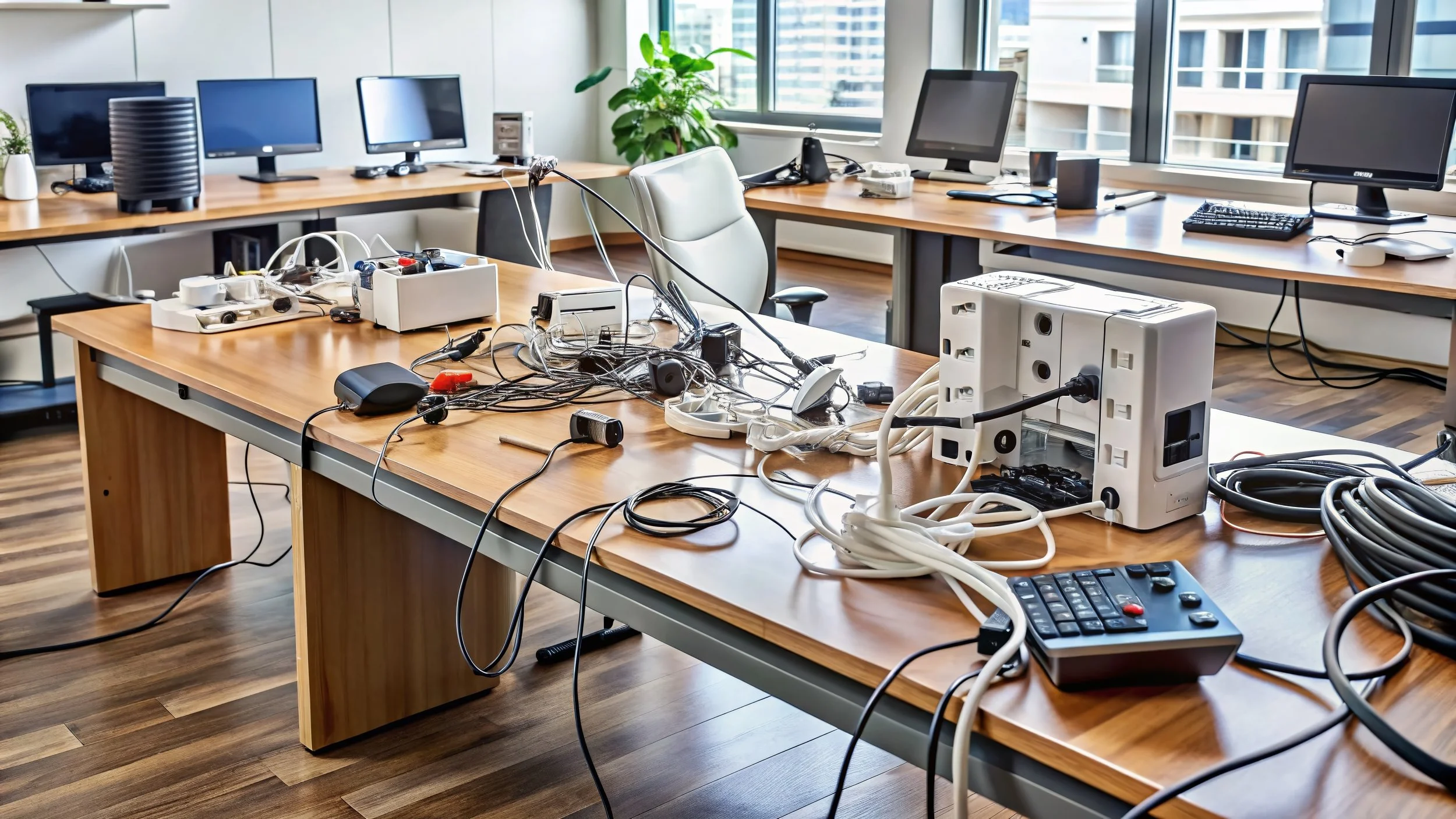
For many organizations, this quiet misalignment goes unnoticed. Work is still getting done and people adapt —but over time, those small compromises start showing up in less visible ways: slower workflows, frustrated employees, missed connections, and spaces that no longer reflect who the organization is today. When leaders recognize these signals early, renovation becomes a strategic decision—not a disruptive reaction.
Below are 5 signs it may be time to take a closer look at how your workplace is really working.
1. Cluster Is Slowing Work Down
Clutter is rarely just about storage—it’s a signal.
When space no longer supports daily work, teams compensate. Extra furniture gets added “temporarily.” Files stack up. Power strips appear where outlets are missing. Meeting rooms pull double duty for tasks they weren’t designed to support.
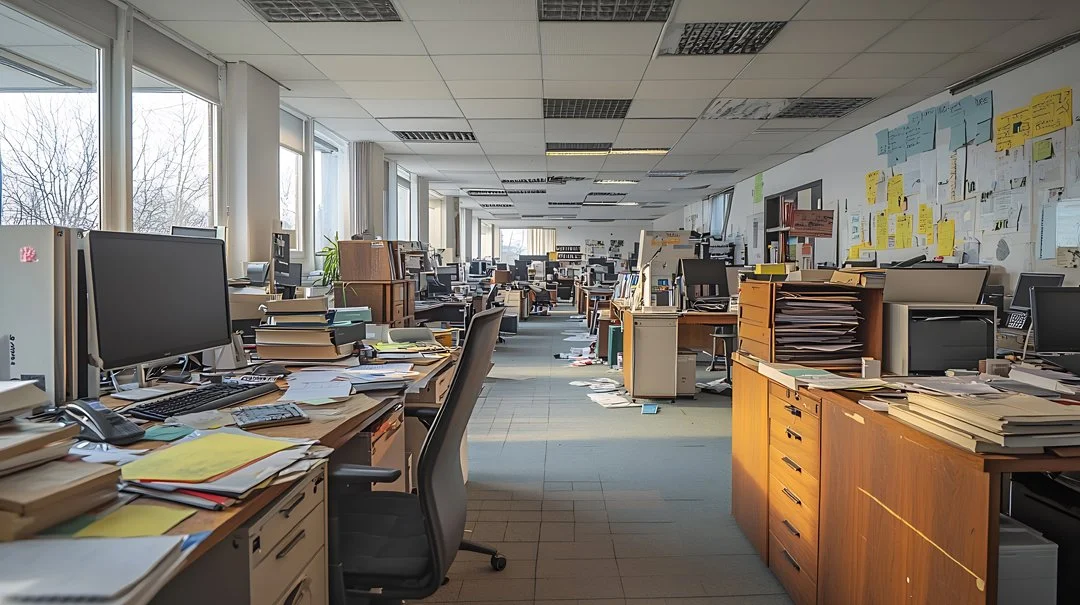
Individually, these fixes seem harmless. Together, they create friction that slows work and distracts focus. When clutter becomes the norm, it’s often a sign the space is no longer designed for how work happens today.
2. Your Space Feels Crowded
Crowding quietly affects productivity.
Employees compete for meeting rooms, huddle spaces, or quiet areas. Collaboration spills into hallways. Focused work happens wherever there’s room—even if it’s not ideal. Over time, the space feels tight, reactive, and harder to navigate.

Crowding doesn’t always mean you’ve outgrown your footprint. It often means the layout no longer matches how people work, collaborate, or move throughout the day.
3. Outdated Space Makes Work Harder
Outdated isn’t just about décor—it’s about functionality.
When layouts, desks, or technology were designed for old workflows, today’s work struggles to fit. Employees hunt for the tools or spaces they need, improvise to collaborate, or avoid areas that don’t work for them.
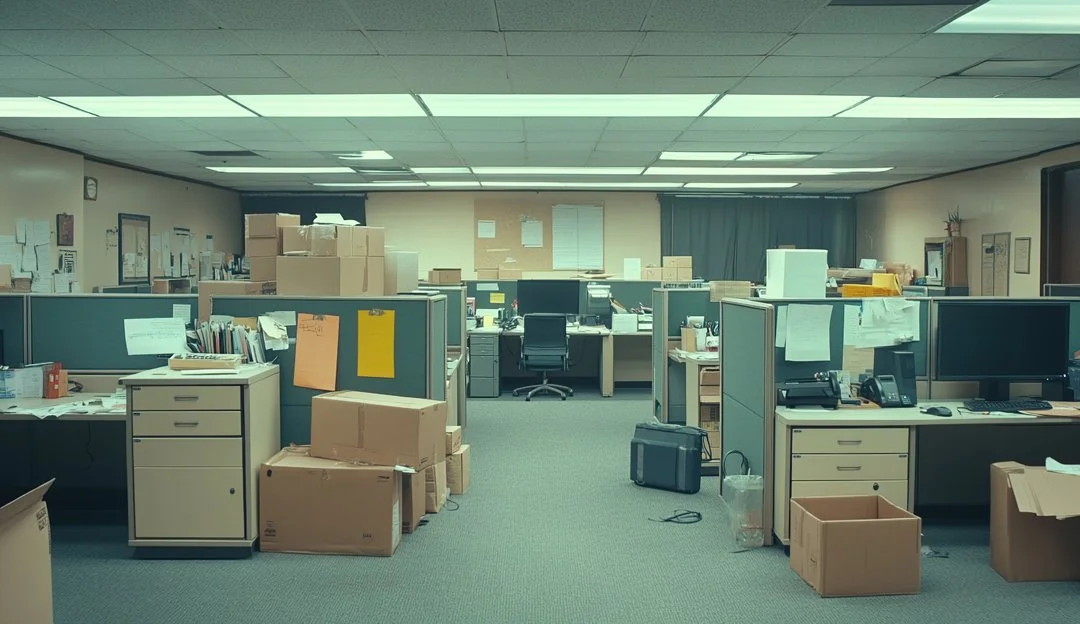
These small daily compromises add up, quietly making work more difficult than it should be. An outdated space isn’t broken—it’s lagging behind how work actually happens now.
4. Noise Affects Focus
Distractions can quietly drain productivity.
Open layouts without acoustic balance make concentration difficult. Conversations carry. Meetings overlap. Employees spend mental energy managing distractions instead of doing focused work.

When noise becomes a daily disruption, it’s a sign the environment isn’t supporting different work modes—focus, collaboration, and recharge. Addressing it early can dramatically improve how people experience the workplace.
5. Productivity Is Down
When the environment works against people, performance follows.
Employees may feel less energized, less engaged, or less connected to the space. Over time, frustration replaces momentum. Pride in the workplace fades—even if the work itself remains meaningful.

Productivity issues aren’t always about workload. Often, they’re rooted in an environment that creates friction instead of removing it.
Renovation Is About Alignment
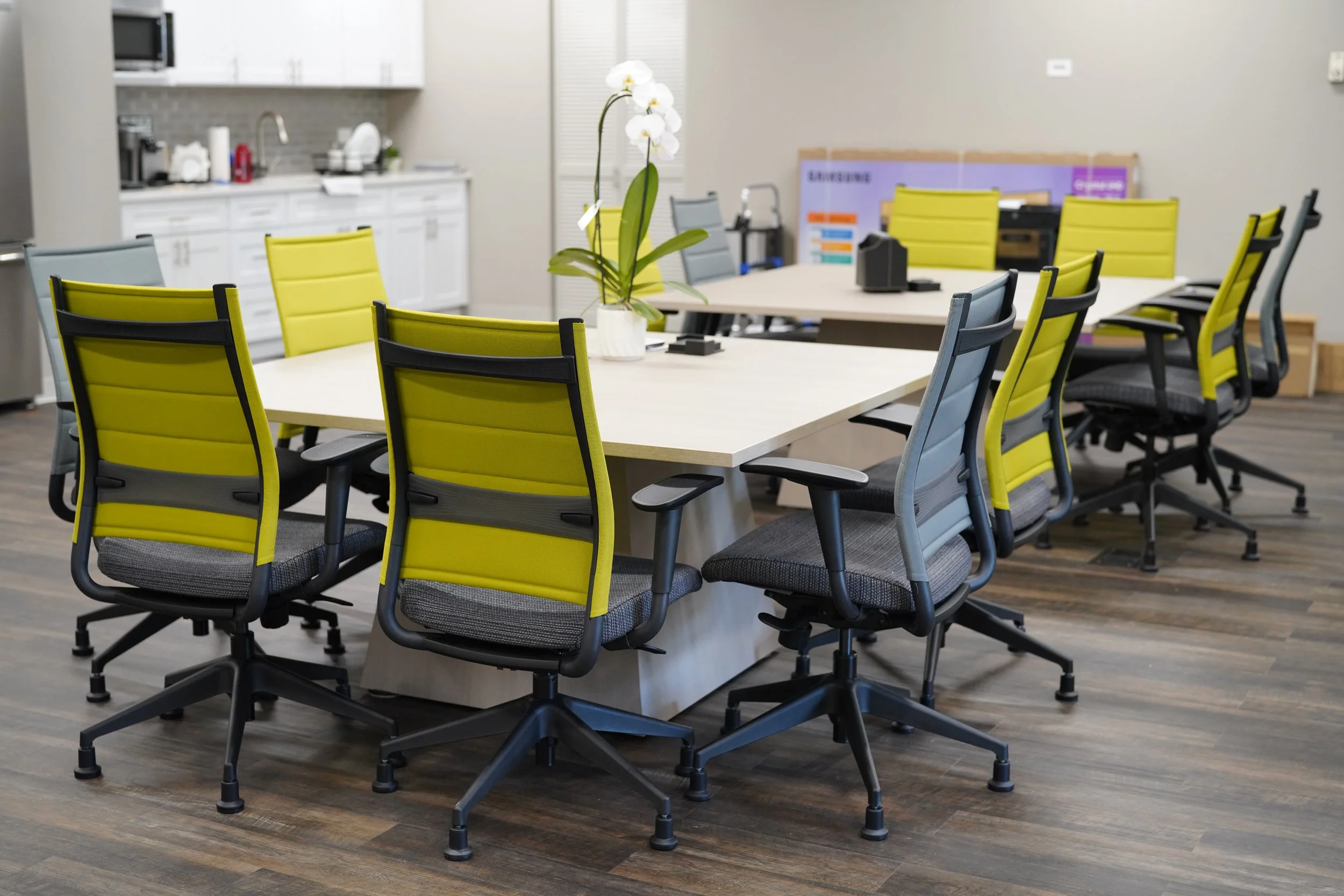
A workplace renovation isn’t just about making a space look new. It’s about addressing the everyday issues—clutter, crowding, noise, outdated layouts—that prevent people from doing their best work.
When space aligns with how teams operate, collaborate, and grow, the benefits show up in engagement, performance, and culture. Recognizing the signs early creates room for smarter decisions and more intentional workplaces.
Does Your Office Need Renovation?
Before a renovation begins, clarity matters. From tenant improvements and compliance to furniture planning, technology coordination, and move execution, many details influence timelines and outcomes.
Download our Renovation Ready One Pager, a comprehensive checklist designed to help organizations plan with confidence and avoid costly oversights. Share your email below to access the guide and take the first step toward a more intentional workplace.
