
2026 Workplace Design Trends Every Business Should Know
Workspaces are evolving faster than ever, and 2026 is shaping up to be a pivotal year for commercial interior design. As organizations rethink how people collaborate, focus, and connect, the physical environment is becoming a strategic asset—not just a backdrop.
Design choices now directly influence talent attraction, employee satisfaction, operational efficiency, and brand identity. Staying ahead of these shifts helps organizations create spaces that feel relevant, functional, and future‑ready.
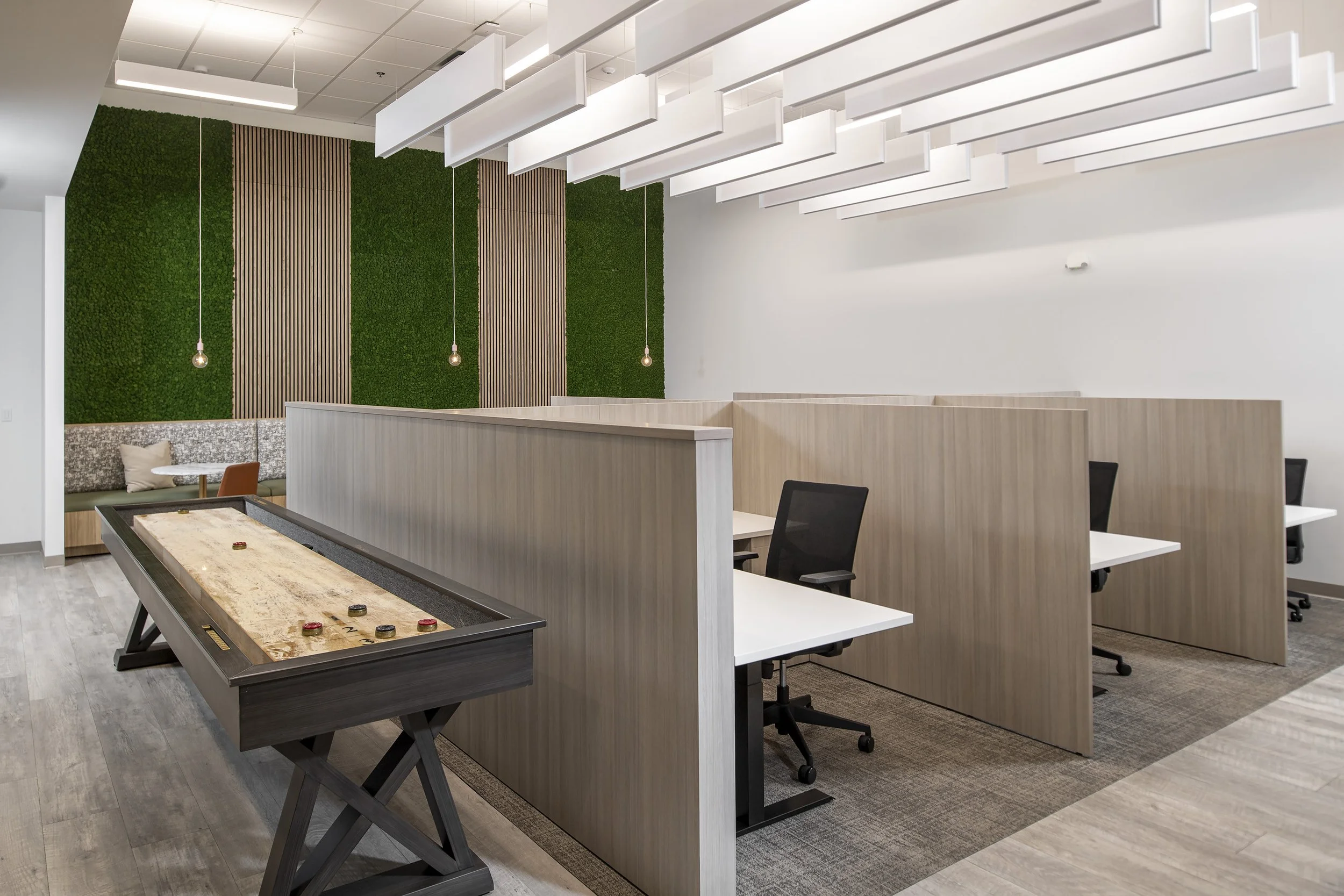
Contemporary workspace featuring semi-private workstations, custom shuffleboard table, and a cushioned-bench custom built with small tables against a biophilic wall.
As these forces converge, they’re reshaping how organizations think about space, culture, and the role of the built environment in driving performance.
Flexible, Hybrid‑Ready Work Environments
Hybrid work isn’t a trend—it’s the new baseline. In 2026, commercial interiors are being designed with adaptability at their core.
Hybrid‑first layouts are replacing traditional floor plans, blending open collaboration zones with quiet, tech‑enabled focus rooms. These environments support fluid workstyles, allowing employees to choose the setting that best aligns with their tasks.
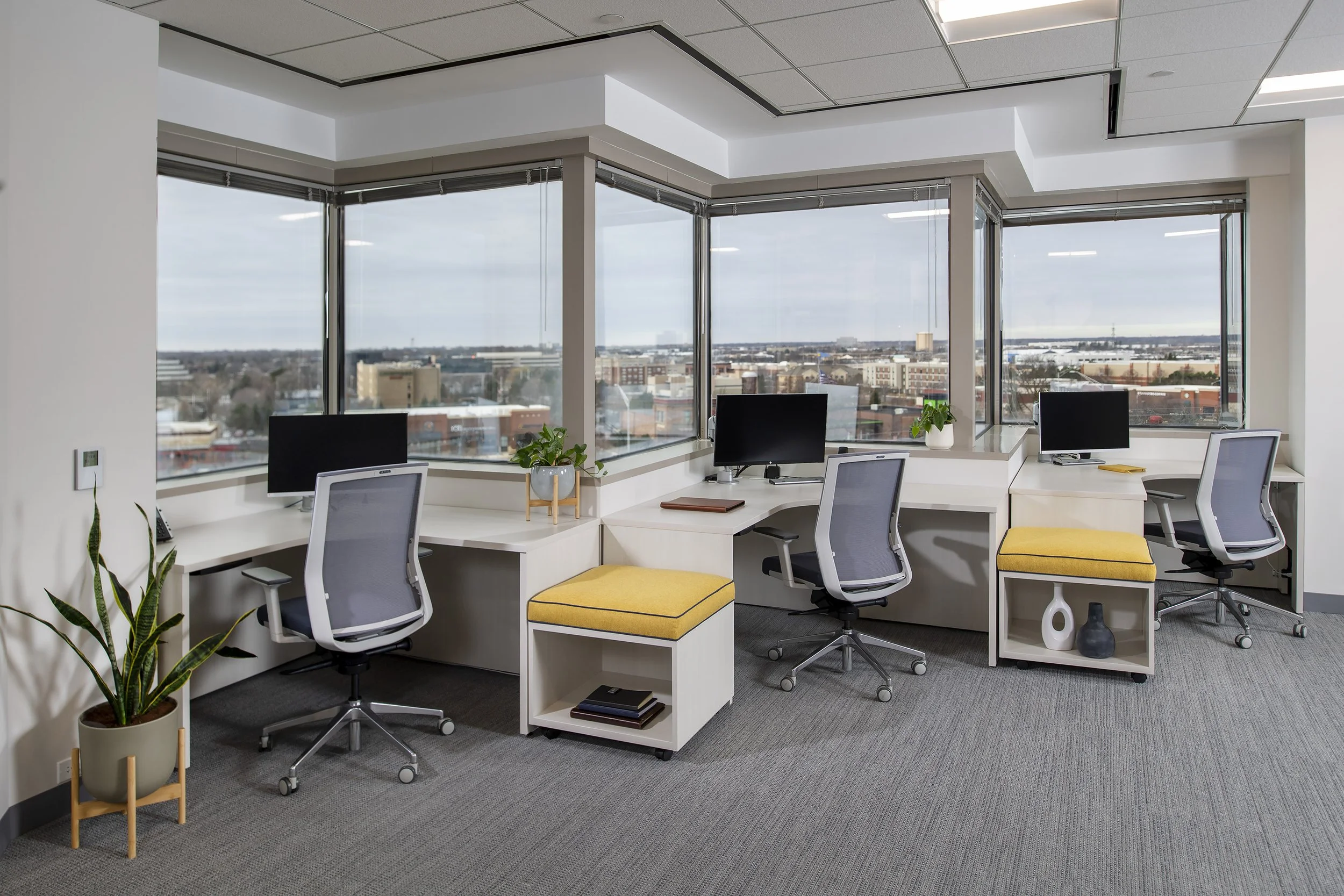
Modern hoteling workstations in a bright, open office with ergonomic seating, large windows, and panoramic city views.
Modular furniture systems are becoming essential. Height‑adjustable tables, mobile partitions, and reconfigurable seating allow teams to transform a space in minutes. This level of agility is no longer a luxury; it’s an operational necessity.
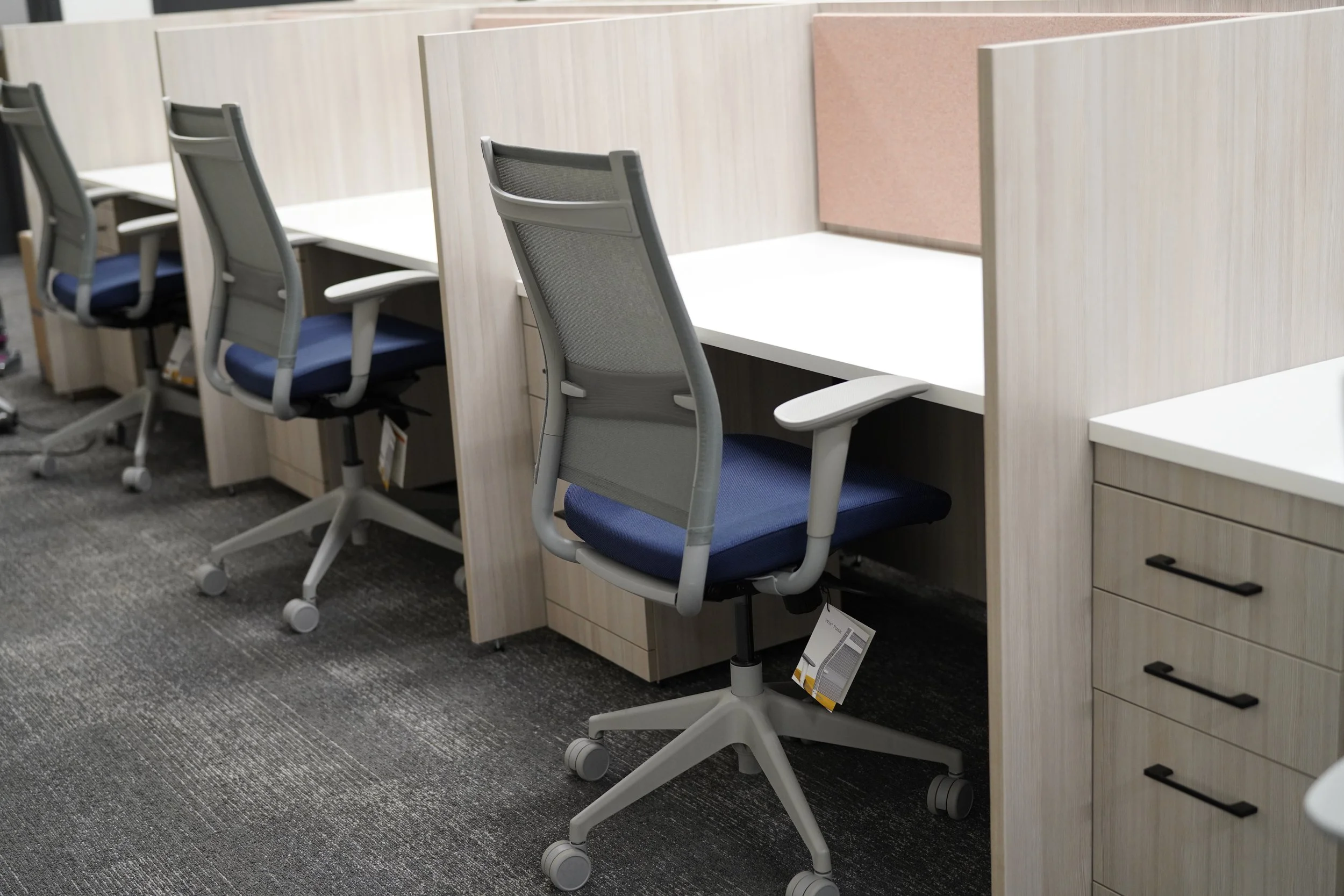
Modular workstation pods with ergonomic task chairs and privacy panels designed for flexible, focused work.
Multi‑purpose meeting areas are also on the rise. Instead of dedicating square footage to single‑use rooms, companies are opting for flexible spaces that can host quick stand‑ups, client presentations, or large team gatherings with equal ease.
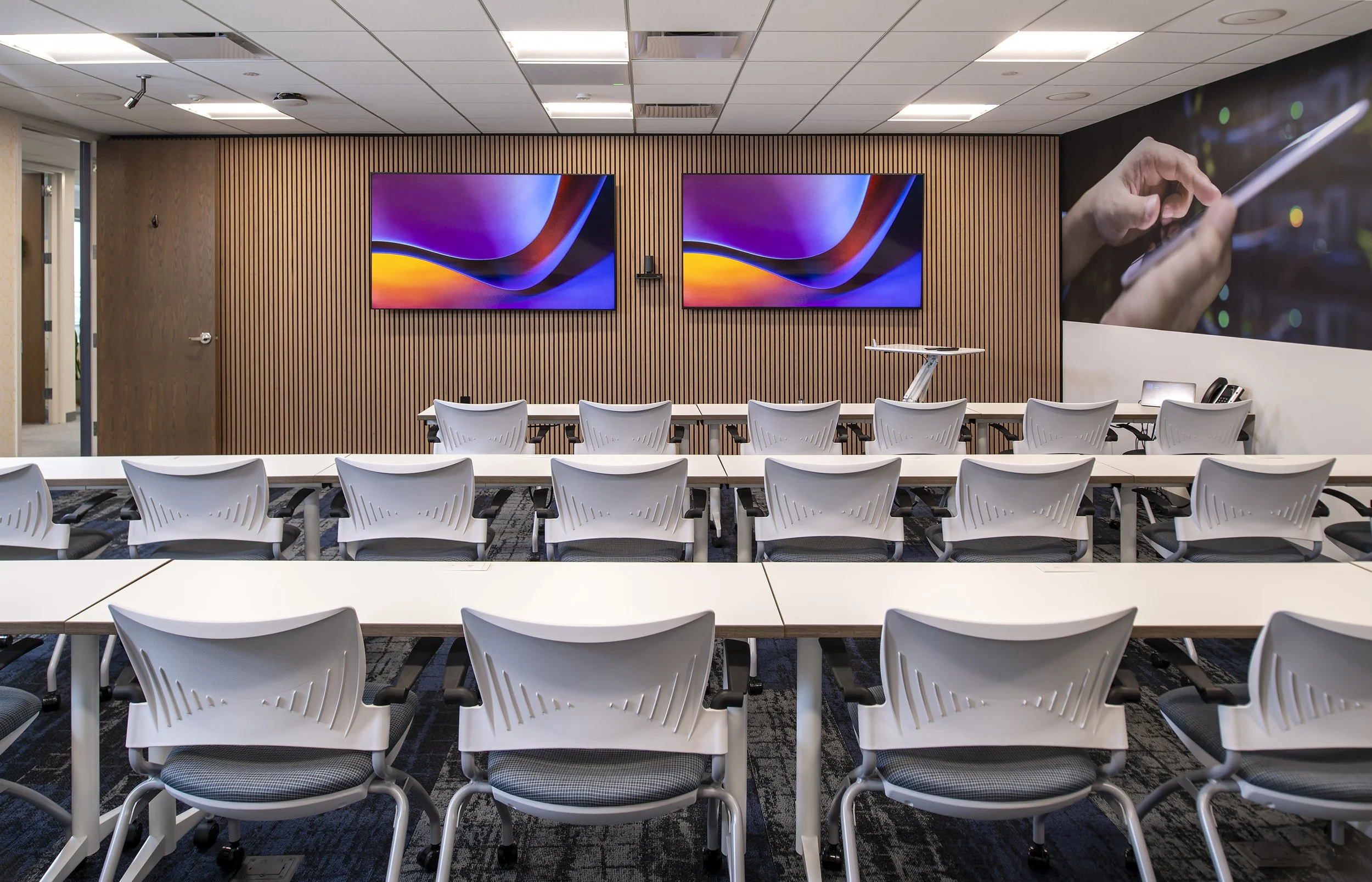
Professional training room with ergonomic seating, dual presentation screens, and a clean, tech‑ready layout for group learning.
Finally, acoustically controlled rooms—small, private, and tech‑equipped—are becoming standard. These spaces support deep work, confidential conversations, and virtual meetings without disrupting the broader office environment.
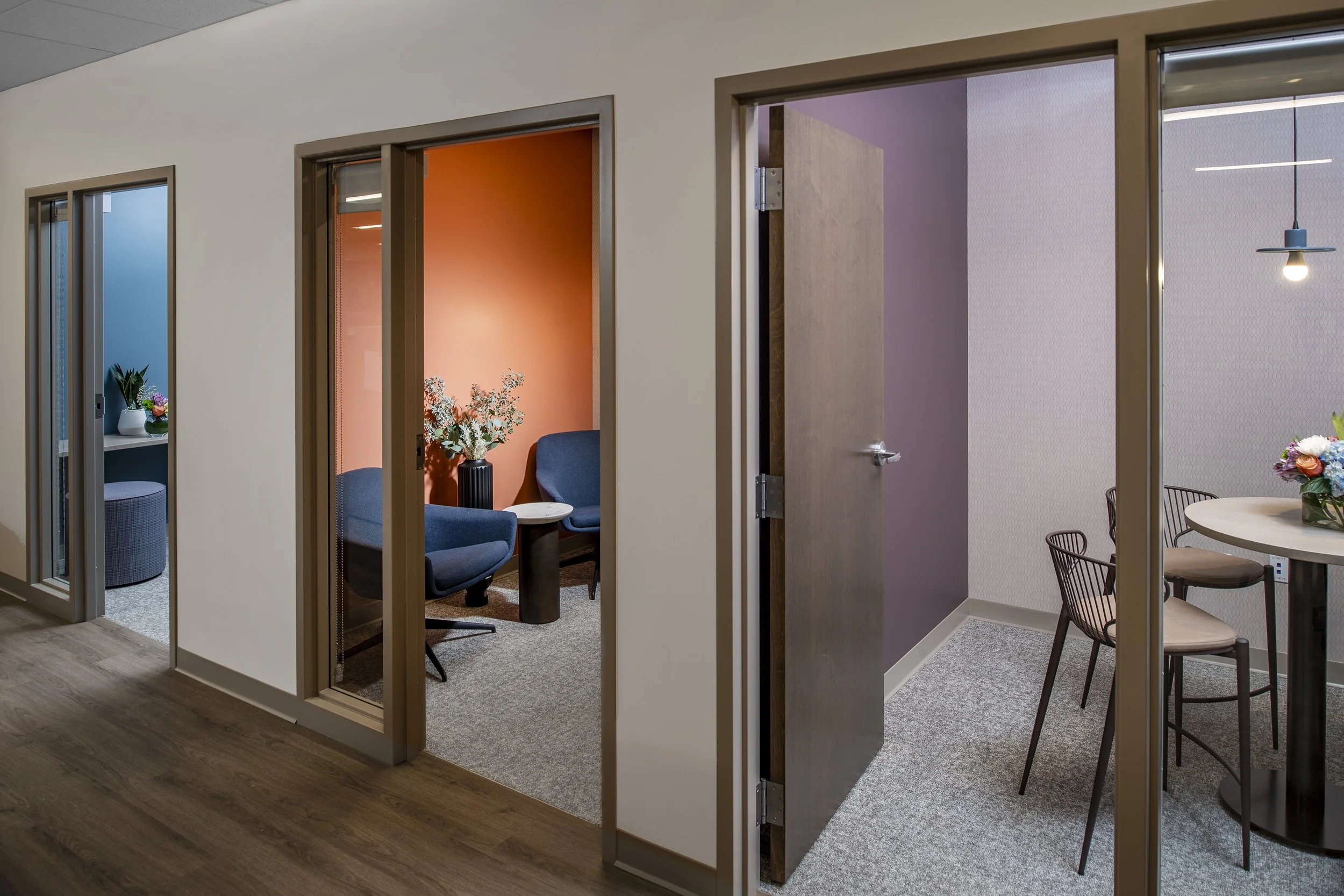
Colorful private breakout rooms designed for focused work, small meetings, or comfortable one‑on‑one conversations.
People‑Centered, Hospitality‑Inspired Design
The workplace is becoming more human. In 2026, commercial interiors are borrowing heavily from hospitality environments to create spaces that feel warm, intuitive, and emotionally supportive.
Warm minimalism is replacing stark corporate aesthetics. Expect softer palettes, natural textures, and materials that evoke calm and comfort. The goal is to create environments that reduce stress and promote focus.
Wellness‑driven spaces—from recharge rooms to café‑style lounges—are becoming central to workplace planning. These areas encourage employees to pause, reset, and connect in ways that support mental and physical well‑being.
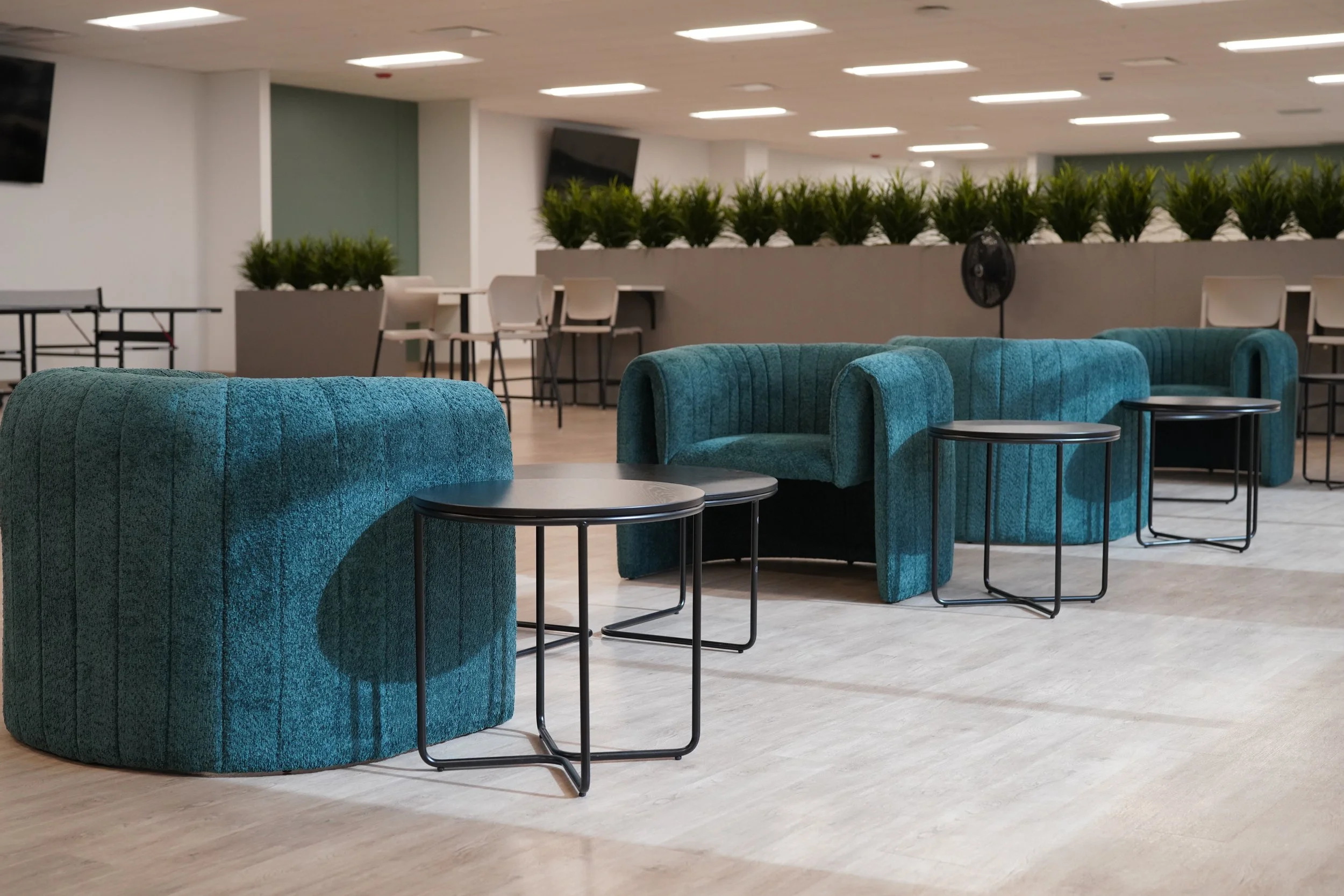
Comfortable lounge seating paired with biophilic design planters creates a relaxing, nature‑inspired break area for employees.
Biophilic design is also taking hold. This next evolution goes beyond adding plants; it incorporates organic forms, natural soundscapes, and multisensory experiences that mimic the outdoors. The result is a workspace that feels alive and restorative.
Lighting is another major focus. Circadian‑supportive lighting strategies are being integrated to enhance comfort, reduce fatigue, and create a more inviting atmosphere throughout the day. Layered lighting—ambient, task, and decorative—adds depth and warmth while improving functionality.
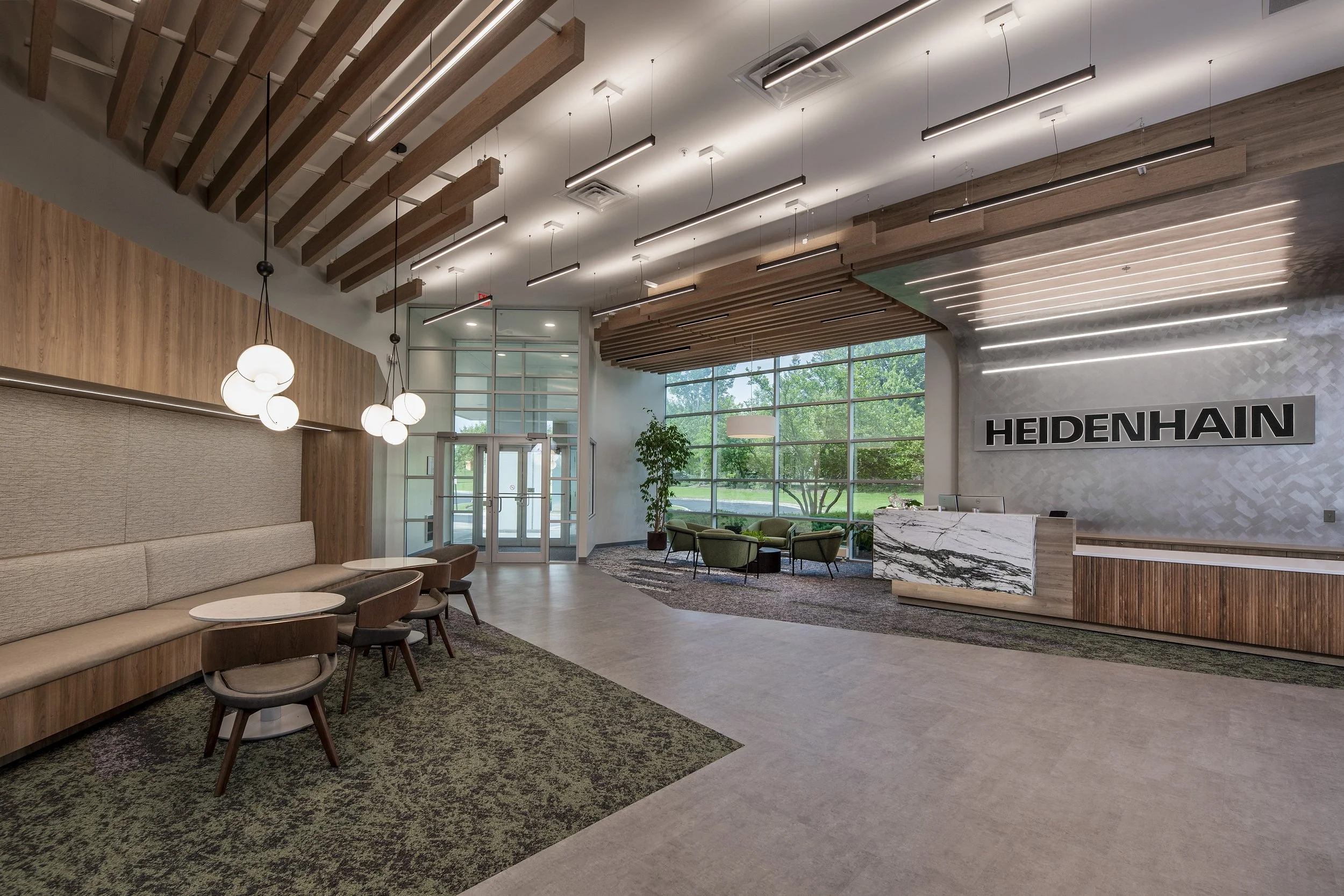
Sophisticated reception lobby with warm wood accents, comfortable lounge seating, and expansive natural light welcoming visitors in a branded corporate environment.
Technology & Sustainability as Core Infrastructure
In 2026, technology and sustainability are no longer add‑ons—they’re foundational elements of workplace design.
AI‑supported meeting rooms are becoming mainstream, offering automated scheduling, smart acoustics, and adaptive lighting that responds to occupancy and activity. These spaces streamline collaboration and reduce friction in the workday.
Digital integration is also advancing. Furniture with embedded power, sensors, and connectivity supports seamless transitions between in‑person and virtual work. Technology is being woven into the environment rather than added on top of it.
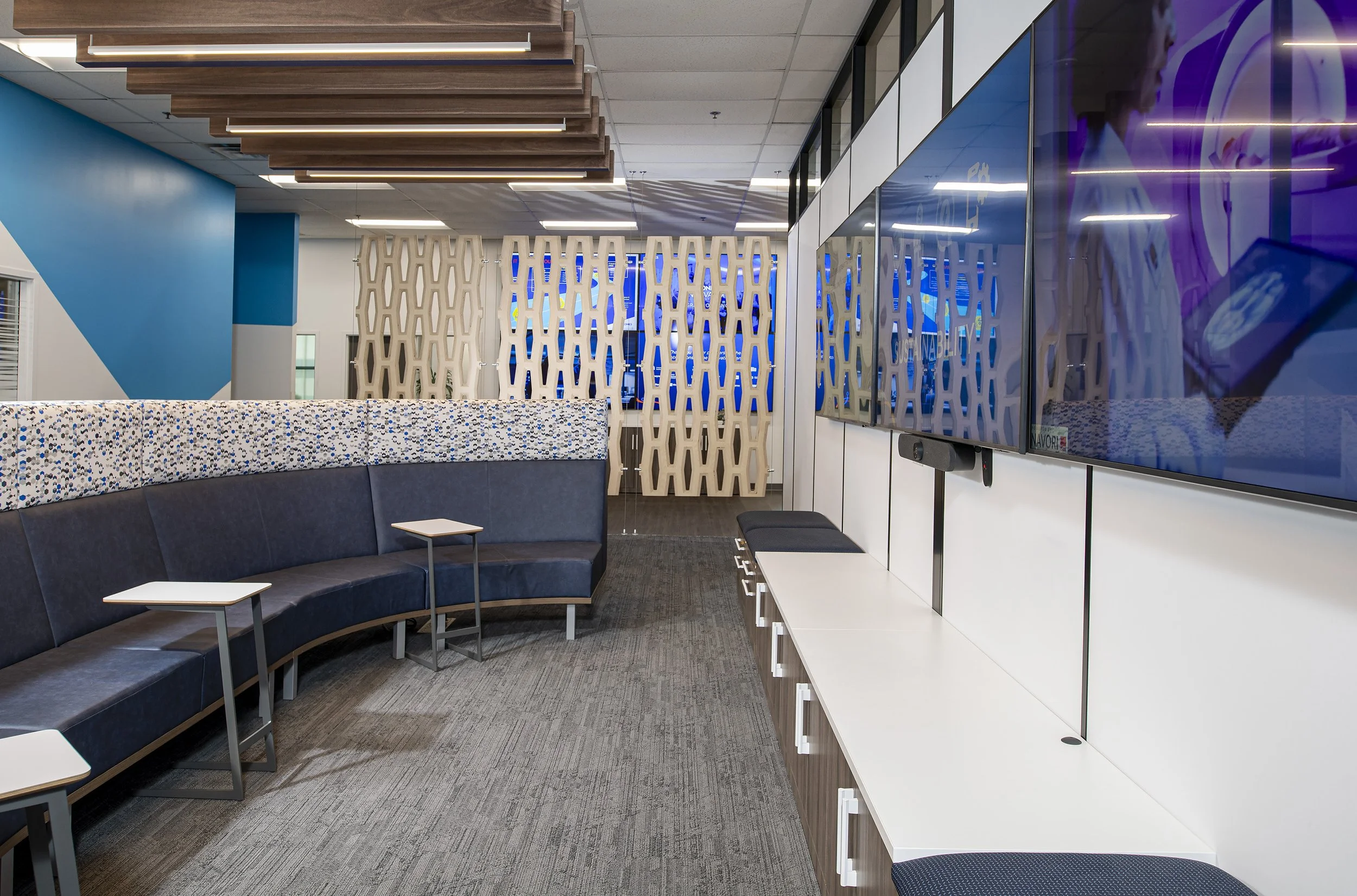
Collaborative huddle area with curved lounge seating, integrated tech displays, and acoustic features designed for team discussions.
Sustainability continues to be a driving force. Circular materials, low‑VOC finishes, and responsibly sourced products are becoming the standard for commercial interiors. Companies are prioritizing materials that support long‑term durability and environmental responsibility.
Finally, energy‑efficient systems—from HVAC to lighting—are being specified not only for cost savings but also to meet ESG goals and reduce environmental impact. Sustainability is now a core business strategy, and the built environment plays a central role.
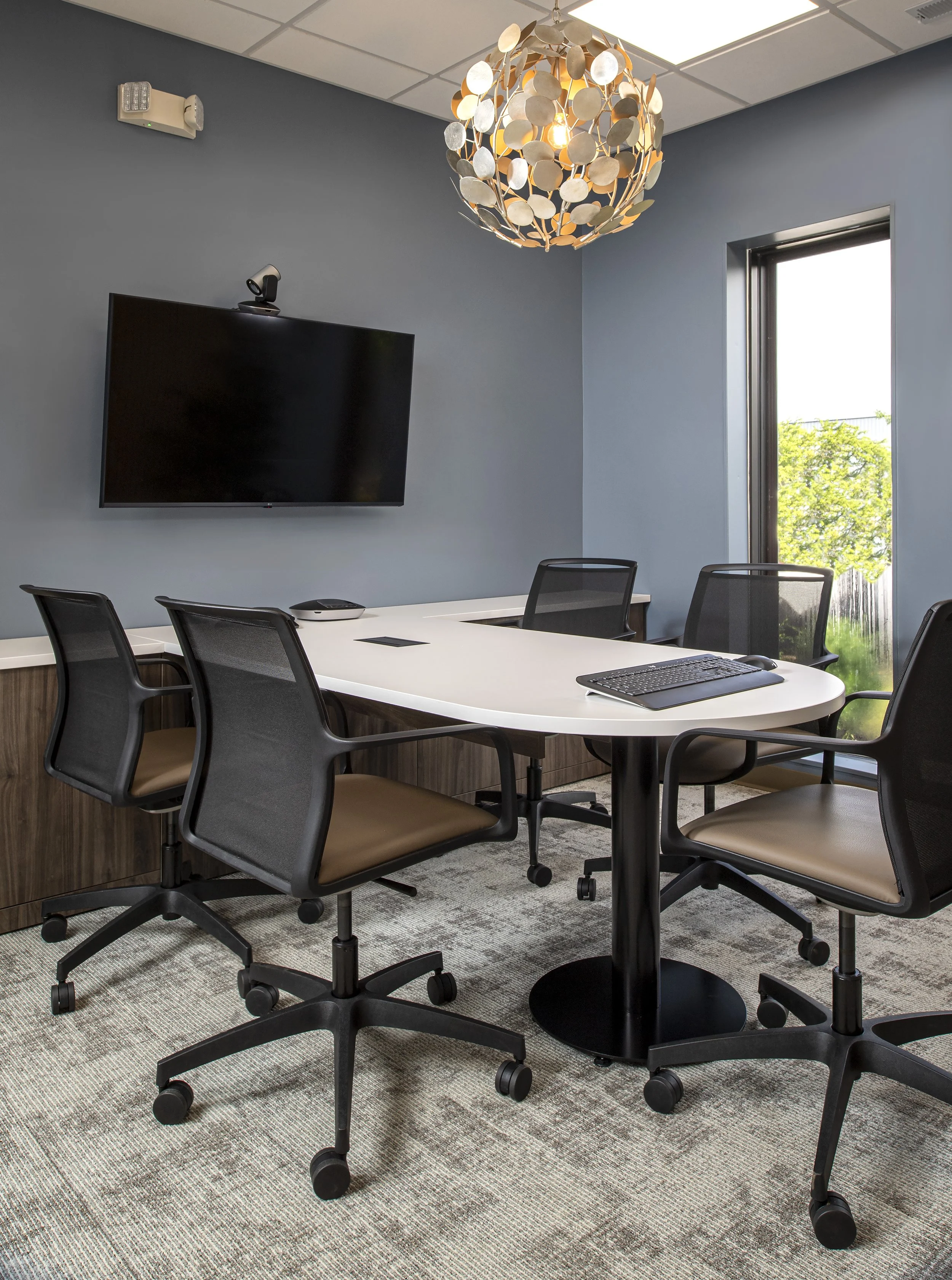
Small conference room with collaborative seating, integrated video display, and contemporary lighting for efficient team meetings.
The workplace of 2026 is flexible, people‑centered, tech‑forward, and deeply intentional. These trends reflect a broader shift toward environments that support well‑being, collaboration, and long‑term adaptability. As organizations continue to evolve, the spaces they occupy must evolve with them.
Ready to bring these trends into your next project? Connect with our team to design a workspace that’s built for the future!