
How Office Furniture and Lighting Impact Employee Productivity & Performance
Your workplace does more than house your team—it quietly shapes how they work every day.
Uncomfortable chairs, poor lighting, and crowded layouts may seem like small details, but over time they can drain energy, interrupt focus, and make even routine tasks more challenging.
While many organizations focus on technology, processes, or policies to improve productivity, the physical workspace often plays an equally important role.
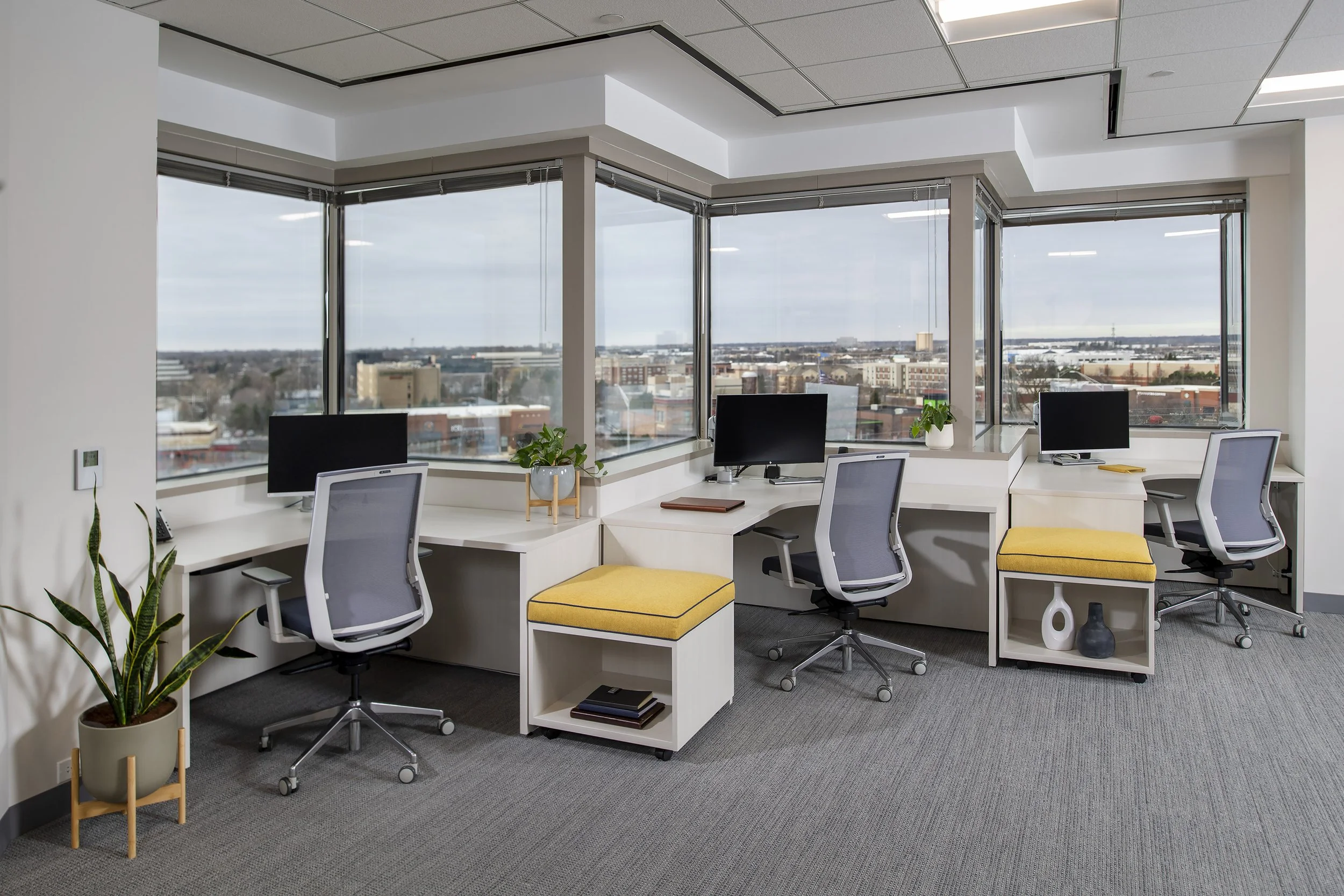
Hoteling Stations in Open Office
Employees spend most of their day at work. When the environment isn’t designed to support comfort and focus, performance can suffer without anyone fully realizing why.
Let’s take a closer look at how office furniture and lighting influence mood, energy, productivity, and overall workplace satisfaction.
Ergonomic Furniture Supports Comfort and Energy
Discomfort is one of the most common workplace distractions.
When chairs lack proper support or desks aren’t positioned correctly, employees often find themselves adjusting their posture, stretching, or shifting positions throughout the day. These small interruptions may seem minor, but they add up.
Over time, physical discomfort can lead to fatigue, reduced concentration, and lower productivity.

Sit Stand L Shape Desk in Private Office
Ergonomic furniture helps solve this challenge by supporting the natural movement of the body.
Adjustable chairs, sit-stand desks, and properly positioned monitors allow employees to customize their workspace in ways that promote comfort and reduce strain.
When employees are comfortable, they can spend less time managing discomfort and more time focusing on meaningful work.
Workspace Layout Influences Focus and Collaboration
Even the best furniture won’t fully support productivity if the workspace layout doesn’t match how employees work.
Some offices are designed with only open workspaces, while others rely heavily on private offices or conference rooms. In reality, most teams need a mix of environments throughout the day.
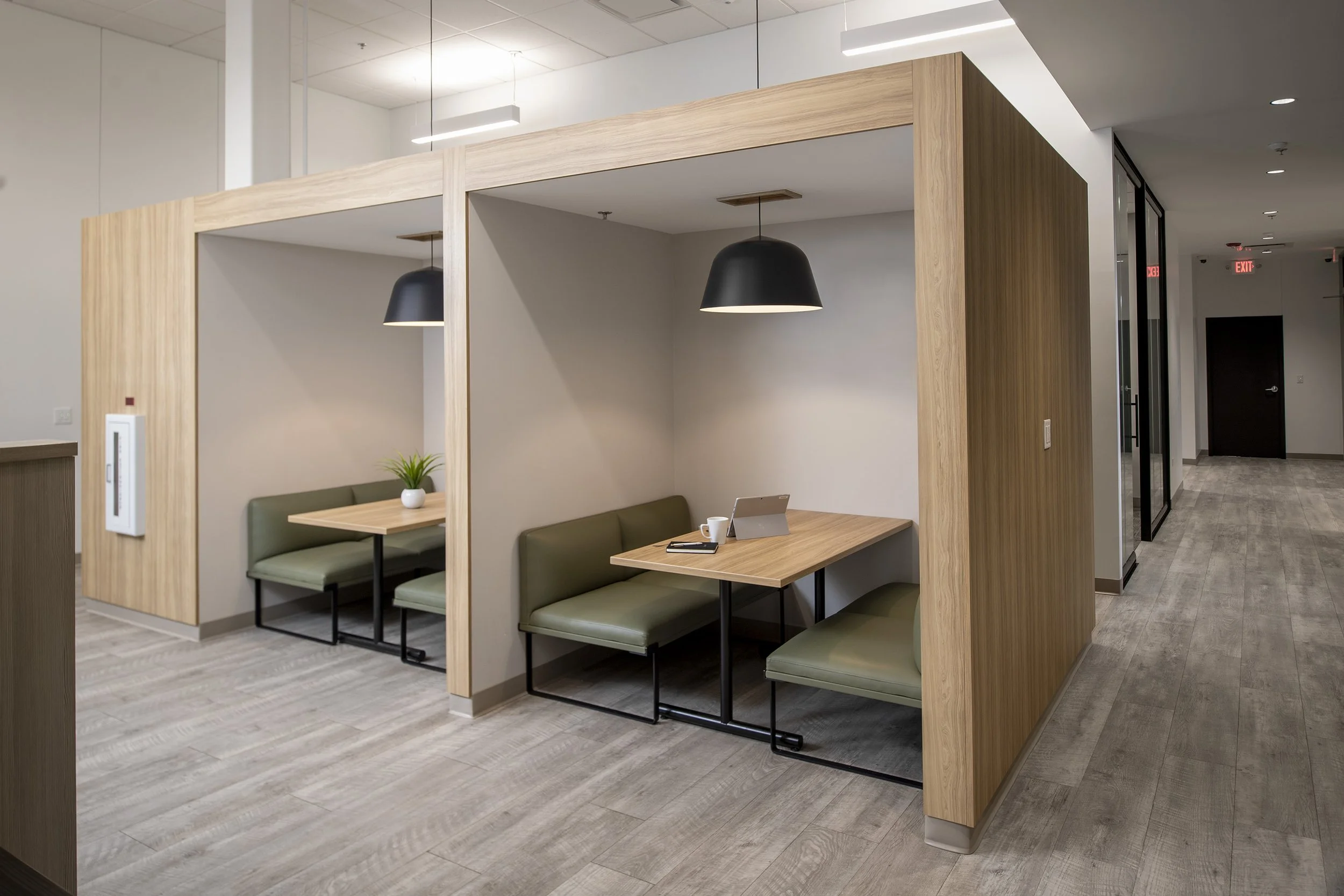
Multi-Functional Booths in Open Office
Without designated areas for both focus and collaboration, employees often struggle to find the right space for their tasks.
A thoughtful layout might include:
Quiet areas for focused work
Collaborative zones for team discussions
Huddle areas for quick meetings or brainstorming
When employees can move between different work environments based on their needs, productivity tends to improve naturally.
Natural and Ambient Lighting Affect Mood and Energy
Lighting is another factor that often goes unnoticed until it becomes a problem.
Dim lighting can cause eye strain and fatigue, while harsh overhead lighting may lead to headaches and discomfort during long workdays. Natural light, on the other hand, has been shown to improve mood, alertness, and overall wellbeing.
Workspaces that combine natural light with balanced ambient lighting tend to create a more comfortable and energizing environment.

Multi-Functional Open Office
Layered lighting solutions—such as task lighting for desks and softer ambient lighting for shared spaces—help employees stay focused while reducing strain on the eyes.
Over time, these improvements can make the workplace feel more inviting and supportive.
Workplace Design Impacts Employee Satisfaction and Retention
Employees notice when their workplace is designed with their comfort in mind.
A workspace that supports focus, movement, and collaboration sends a clear message that the organization values its people. When employees feel supported by their environment, they are more likely to stay engaged and motivated in their work.
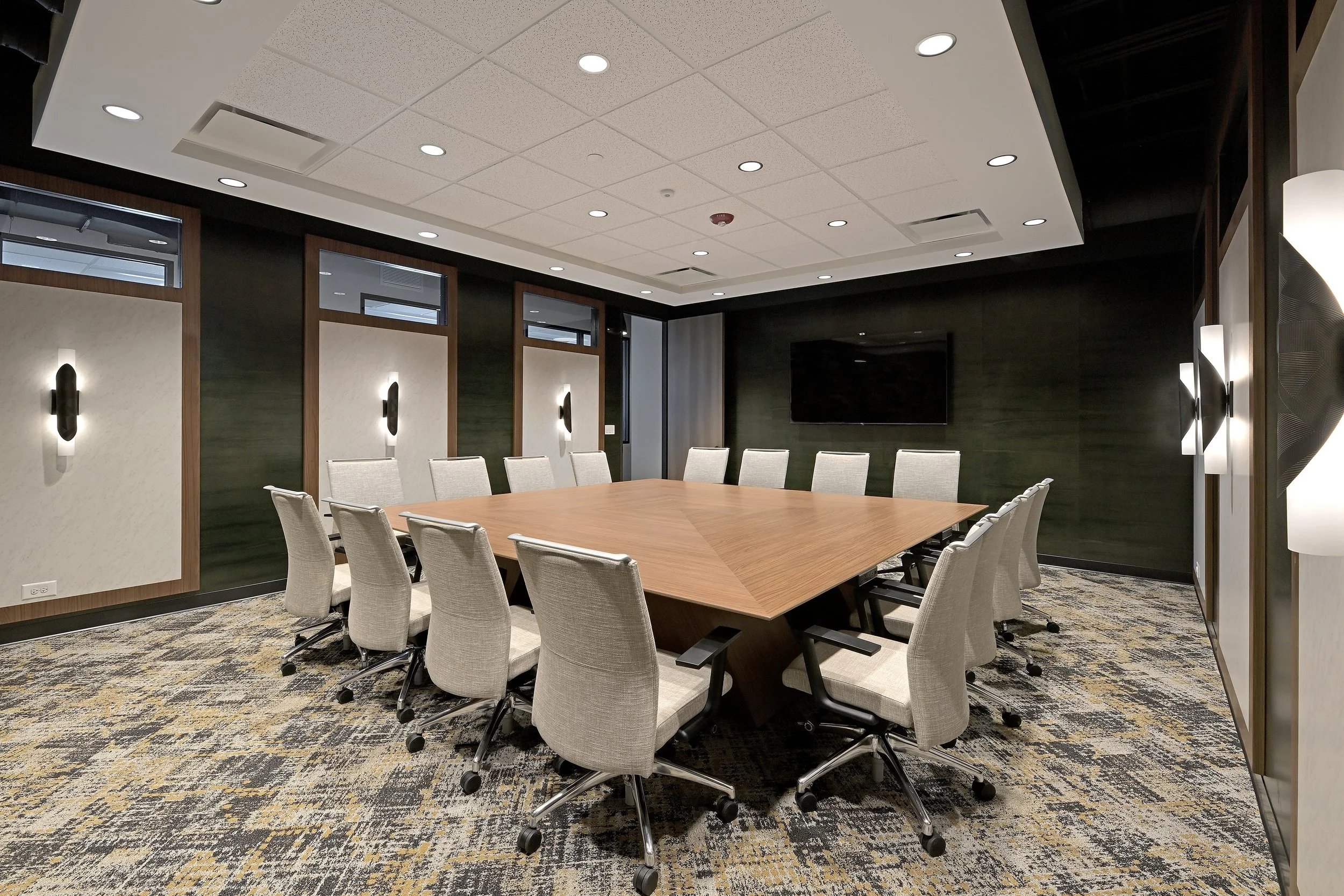
Conference Room
On the other hand, poorly designed workplaces can lead to frustration, disengagement, and eventually higher turnover.
Thoughtful workplace design doesn’t just improve productivity—it helps build a culture where employees feel comfortable, valued, and supported.
Create a Workplace That Helps Employees Thrive
Office furniture and lighting may seem like simple design choices, but they have a meaningful impact on how employees experience the workplace each day.
Comfortable seating, balanced lighting, and intentional workspace layouts all contribute to:
Better focus and productivity
Higher energy levels throughout the day
Improved employee satisfaction
Stronger long-term retention
When leaders take a thoughtful approach to workplace design, they create environments where employees can truly do their best work.
Ready to create a more productive, energized workplace?
Explore Project Thrive to see how thoughtful furniture, lighting, and layout design can improve focus, energy, and employee wellbeing. By creating workspaces that support your team’s comfort and performance, you help employees do their best work every day.
