
"Change management" is one of those terms that tends to live in strategy decks and quarterly reviews—important, but rarely something people feel excited about. Yet change is one of the few constants in our industry, so rather than confine it to another meeting, our team decided to experience it firsthand.
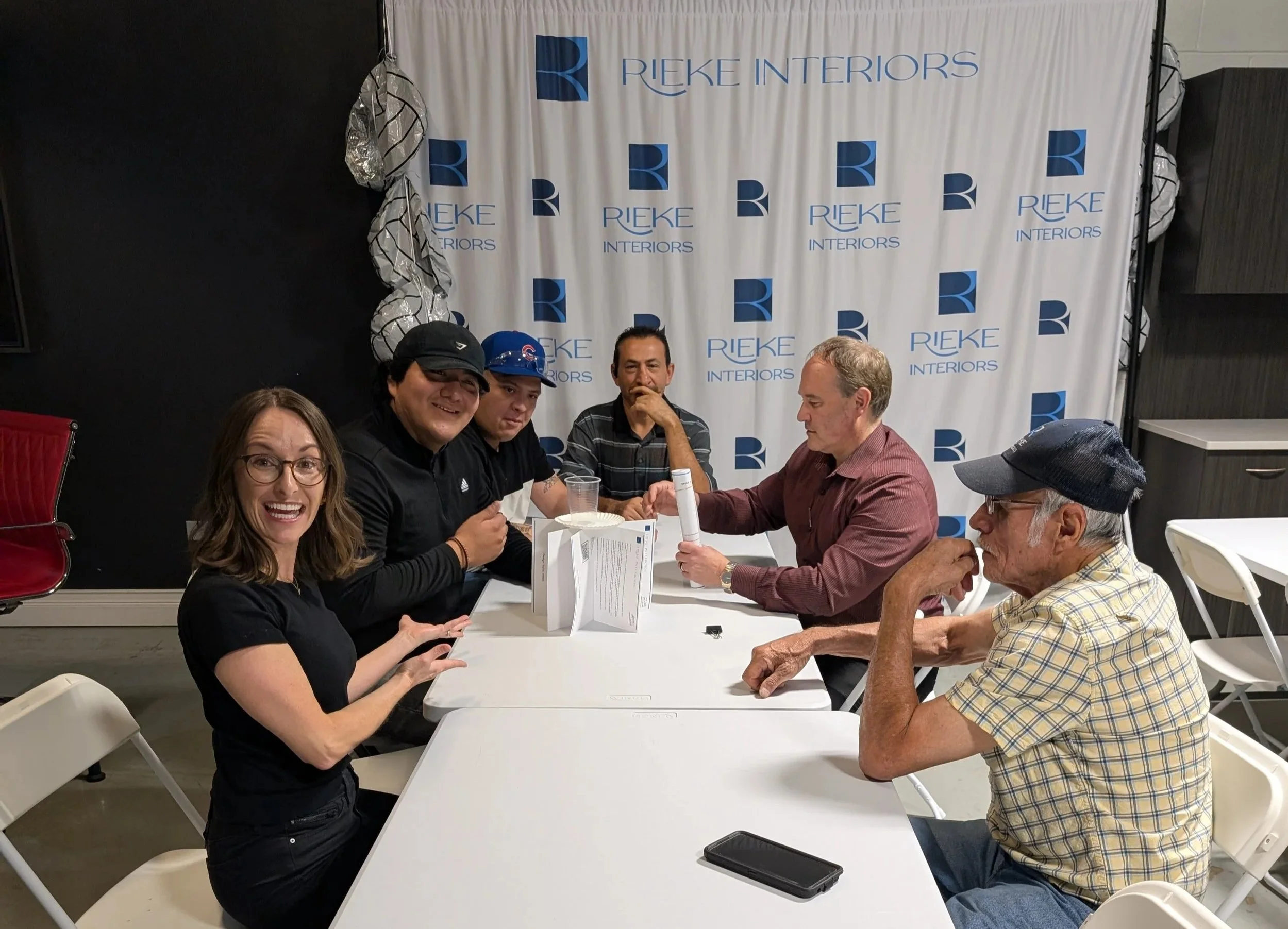
The result was Adapt or Lose—a team challenge built around paper cups, index cards, paper clips, and a series of well-timed curveballs. What started as a simple building exercise turned into a meaningful reflection of how our team approaches change.
Turning Change into a Team Challenge
Teams of four to six were given a few minutes to build the tallest free-standing tower they could, using whatever office supplies were on the table. The objective was clear, and teams got to work quickly, settling into their strategies.
That's when the requirements began to shift. The tower suddenly had to support a sticky note at the top, and teams had to adjust their designs mid-build. Just as things stabilized, another change followed—building could only be done with non-dominant hands, forcing teams to slow down and rethink their approach. Then, one final pivot: forget height entirely, the tower now needed the widest, most stable base possible.
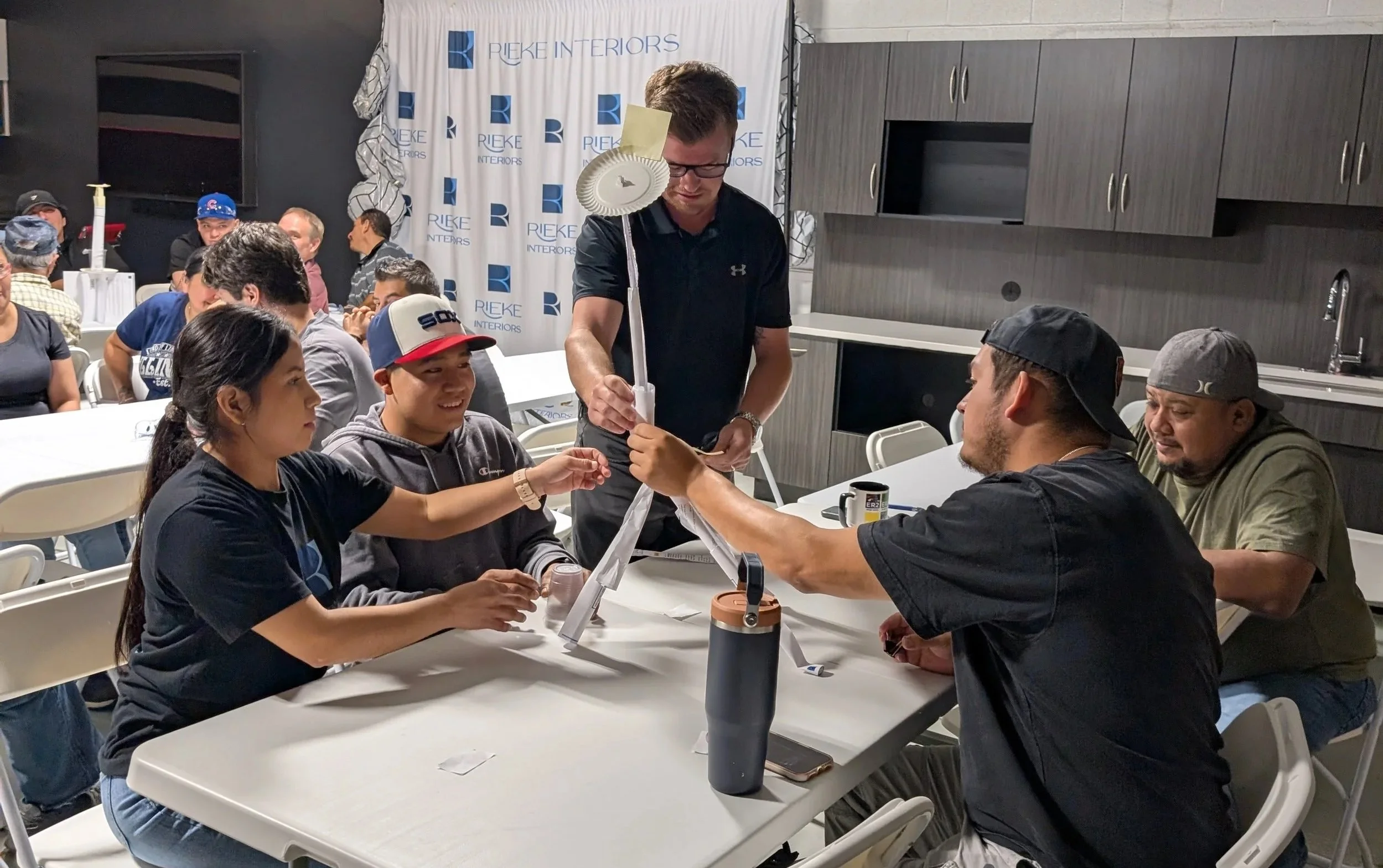
Each shift changed the room's energy. Some teams adapted immediately, rebuilding without hesitation. Others held onto their original plan longer than the moment called for. Watching these two approaches unfold side by side made the exercise's purpose clear.
Making it Personal
What made this exercise distinctly relevant to our business was the thinking behind it. Our President, Melissa Dotson, also the author of Elevate Your Greatness — didn't choose these twists arbitrarily—she built the challenge around situations our team encounters regularly in this industry.
The sudden shift in tower requirements mirrored what happens when a customer changes direction midway through a project. Building with a non-dominant hand reflected the disruption that comes with new technology, requiring teams to rework processes they'd already mastered. Even the final pivot to a wider, more stable base echoed a familiar business reality: sometimes the priority isn't speed, it's stability, and reaching it means being willing to let go of what's already been built.
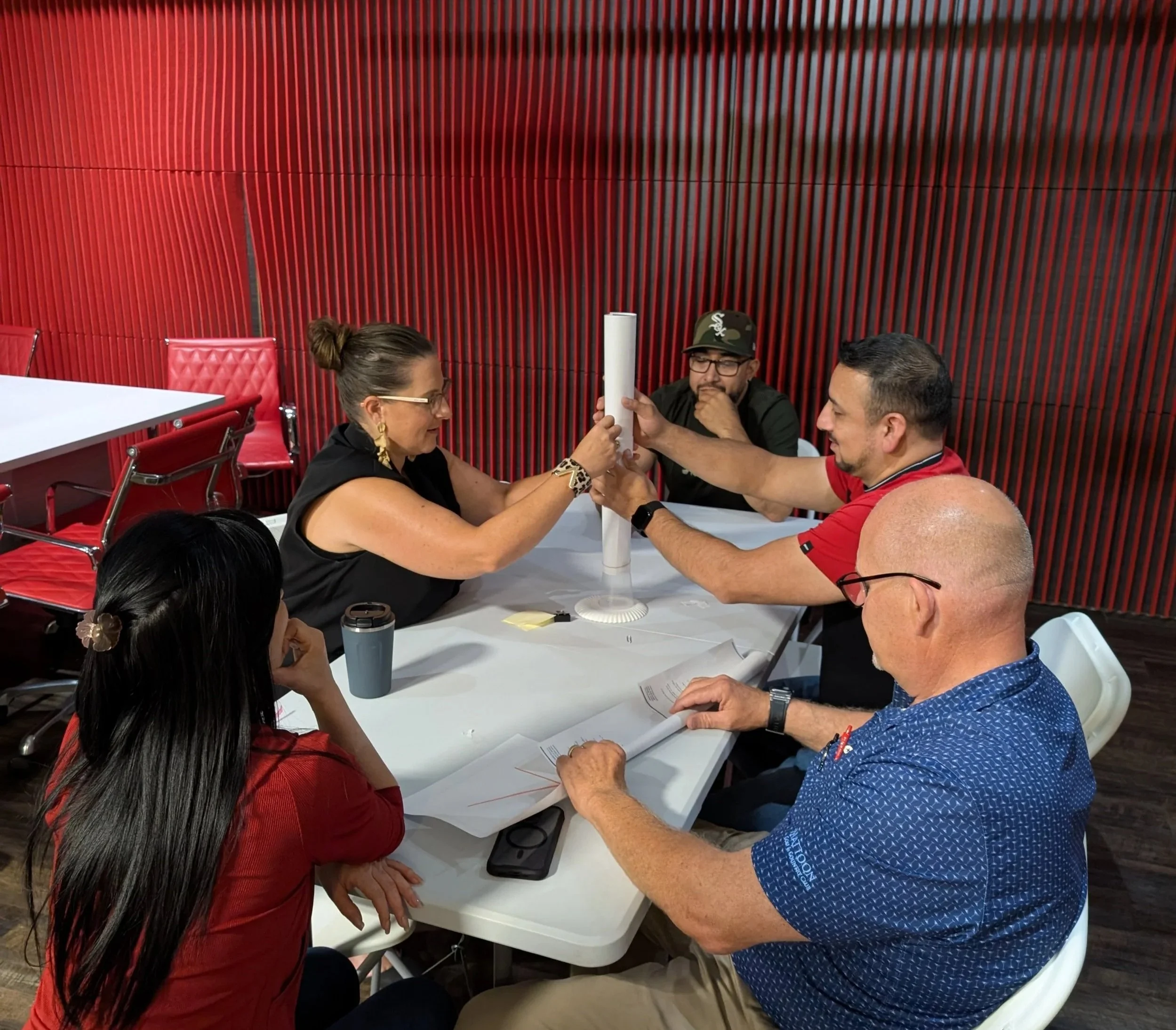
Connecting each twist to something the team genuinely experiences is what elevated this from a team-building exercise to something more instructive. It's also what allowed change management to move from an abstract concept to a shared, lived understanding across the team.
Takeaways
Once the towers were complete, the teams came together to reflect on the exercise. The discussion centered on a few key questions: Which teams adapted the fastest? Did the strongest original plan actually win? What happened the moment priorities shifted?
A few conclusions emerged clearly:
The best plan doesn't always win. Teams with the most polished first draft weren't necessarily the ones who came out ahead.
Speed of adaptation matters most. Teams that let go of their original approach quickly, and kept moving as priorities shifted, consistently performed better.
Change is constant. In our industry, customer needs evolve, technology advances, and priorities get reshuffled without warning.
Adaptability is a competitive advantage. Teams that treated change as an expected part of the process, rather than a disruption, were the ones that came out ahead.
This isn't just an internal exercise—it's a reflection of how we operate on every project. Client priorities shift, timelines compress, and requirements evolve, often without much notice. A team that has practiced staying steady through that kind of change internally is better equipped to handle it when it happens on a client's project, without losing momentum or quality along the way.
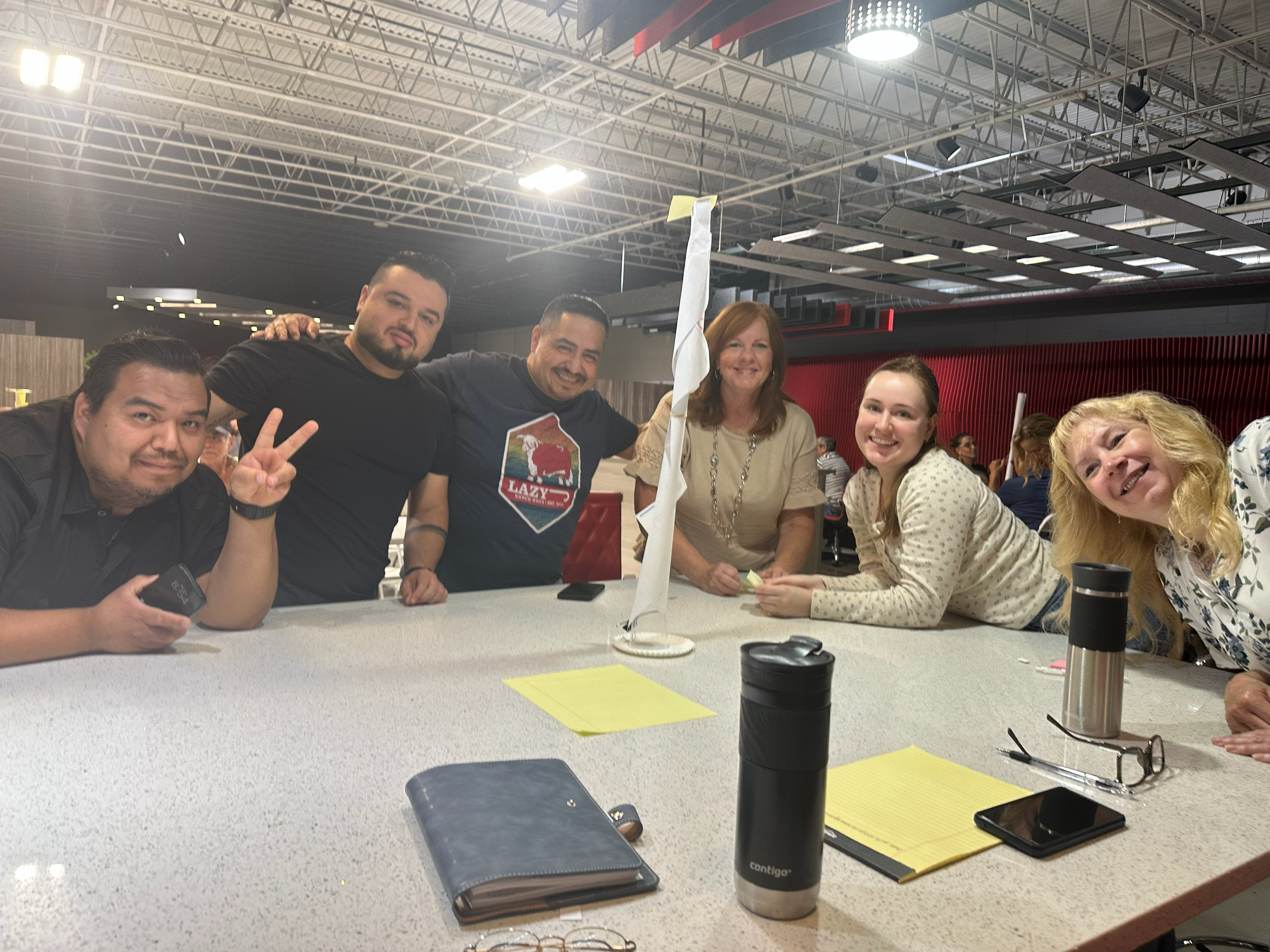
Exercises like Adapt or Lose are more than team-building for its own sake—they're part of how we build a culture at Rieke where our team can practice, connect, and grow, even as circumstances shift without notice. It's a reminder that agility isn't just a leadership principle; it's a skill that can be practiced, and strengthened, together—and one that shows up directly in the experience our clients have working with us.
Interested in building a thriving culture in your organization?
Learn how Project Thrive helps companies create engaging, supportive workplaces where employees can grow, connect, and do their best work.
