
With the growing trend of companies requiring staff to come back to work in the office four and five days a week (rather than remote), how do business owners make sure their people want to come to the office? And can be productive there when they do?
A dim, cramped, or outdated office can frustrate employees and give them reasons to resist returning to the office. It can also contribute to resignations and make it more difficult to retain good talent.
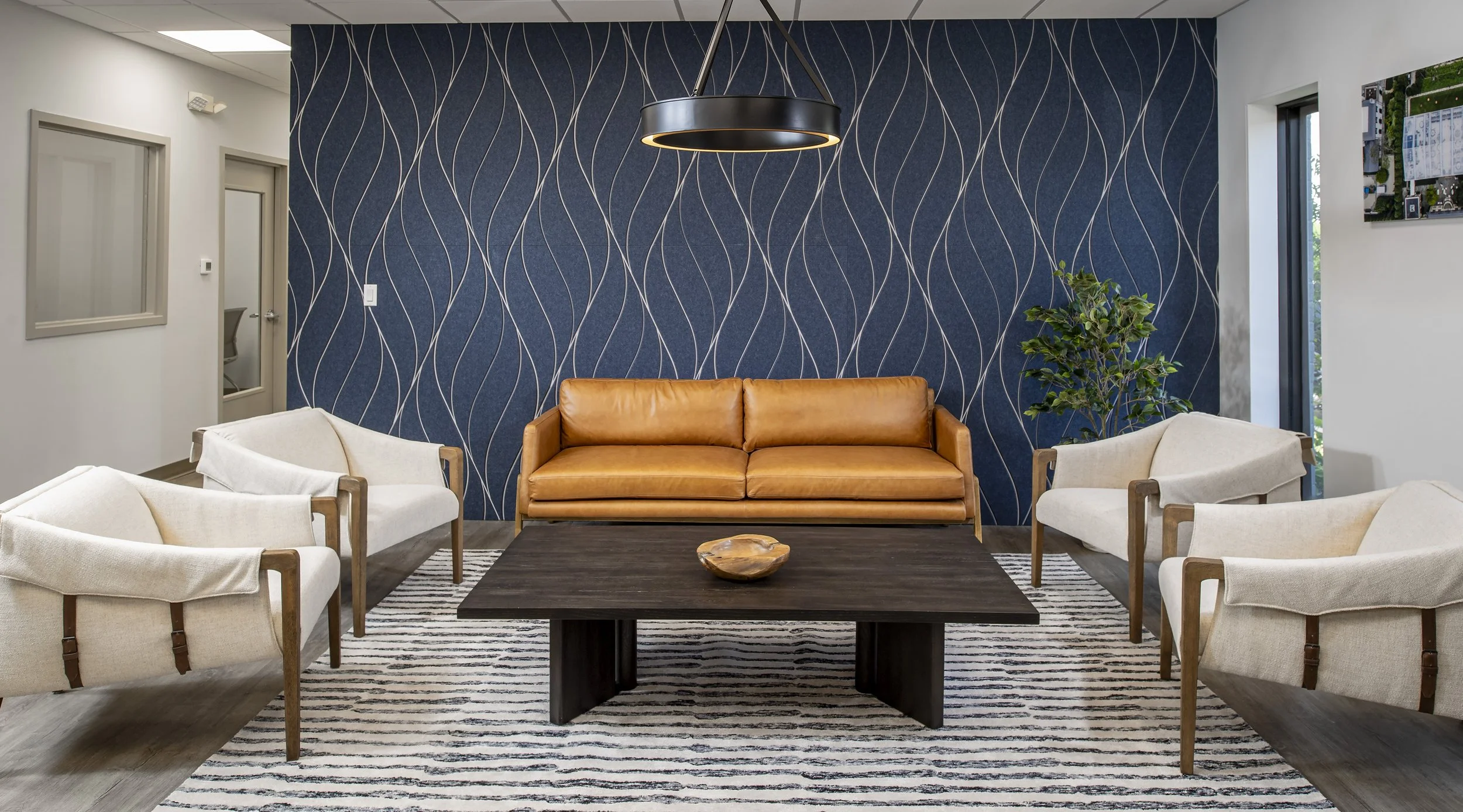
Lounge area with unique wall covering and indoor plants
In contrast, an office space that is bright, comfortable, inviting, and a productive place to get work done tells employees (and future job candidates) that your business values people, invests in helping them do their best work, and cares about where they work.
This article looks at how office interiors influence staff performance and job satisfaction. It also looks at specific problems that quietly turn employees away, and how a thoughtful renovation can turn a workplace into one people want to come into every day.
Why Office Space Is a Talent Issue
Hybrid and remote work enabled people to work in the comfort of their own home. No commute. No distractions from colleagues working next to them. No cramped or uncomfortable workstations or office chairs, and no interruptions.
To get staff wanting to come back to the office, day in and out, your workplace has to help them thrive. You have to create an environment that’s better than working at a kitchen table, in a coffee shop, or at another company’s office down the street.
Creating a space that feels considered and helps people functionally perform their job more productively is an important part of becoming a great place where people work.
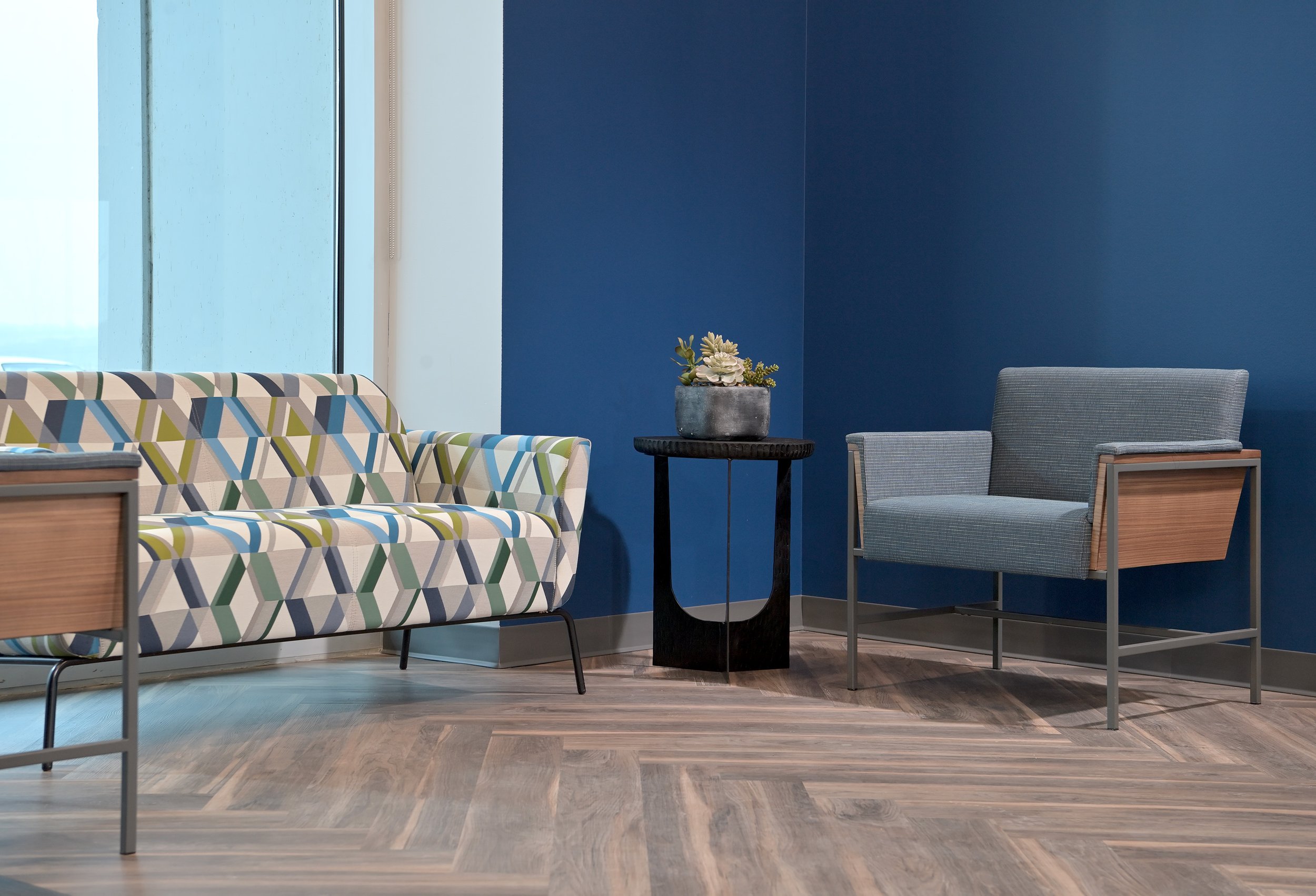
Office Waiting Room
The Office Problems That Quietly Push Talent Away
Most companies aren't losing staff, or prospective new hires, because of one dramatic issue. It’s usually a handful of smaller office problems that add up.
Poor lighting. Harsh overhead fluorescents, or not enough natural light, affect mood and energy more than most people realize. A space can be functional on paper and still feel draining to be in.
Cramped layouts. Not enough room to focus, collaborate, or simply move comfortably signals under-investment, even if the square footage was never meant to feel that way.
Worn or mismatched furniture. Scuffed desks, mismatched chairs, and furniture that's clearly seen better days read as neglect, even when the work itself is exciting and the team is strong.
Lack of variety. An office with no options for focus work, collaboration, or informal conversation limits how people can actually work, and makes the space feel one-dimensional.
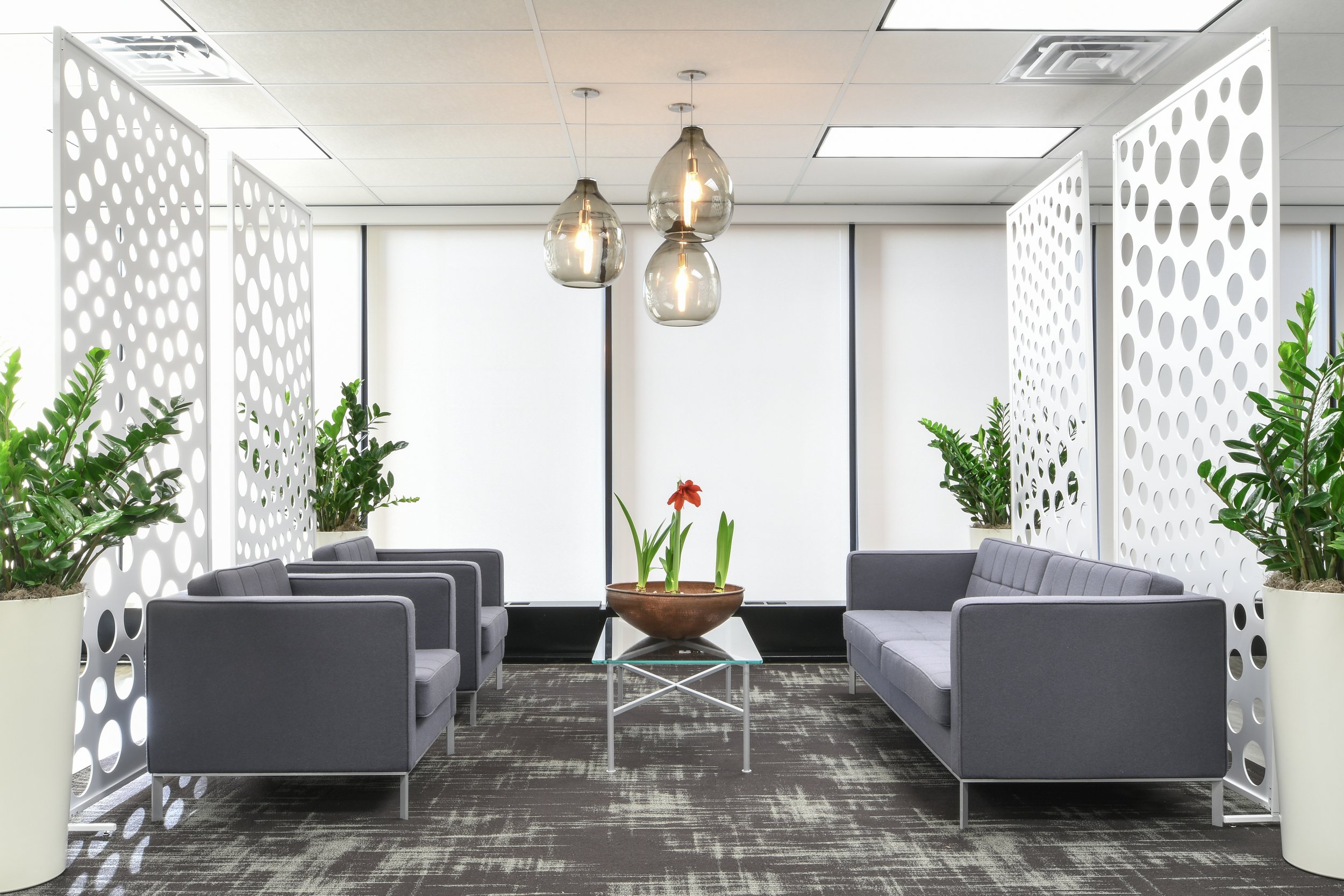
Modern office reception with comfortable furniture and natural light
How to Approach an Office Redesign with Talent in Mind
A full office renovation can feel like a big undertaking, but it doesn't have to happen all at once. A few practical starting points:
Start with the spaces staff use most and new hires see first — reception areas, interview rooms, and the main work areas that anchor a first impression.
Address the most visible pain points first. Lighting, seating, and worn furniture often have an outsized impact relative to the effort required to fix them.
Design for flexibility. Spaces that support different work styles — and can adapt as the team grows or changes — hold their value longer.
Involve employees in the process. The people using the space every day often know exactly what isn't working, and where.
Work with a design partner who can prioritize impact. A good partner helps identify which changes matter most to the people experiencing the space, not just which changes are most visible from the outside.
A redesign doesn't have to be immediate or exhaustive. It has to be intentional about where it starts.
Want More Thoughtful Advice and Help?
Our design team can help you identify the changes that matter most and create a workplace people want to be part of. For a free, no cost, consultation just give us a call or send us an email.
