
Office Space Planning Made Easy with Modular Furniture
Growth is exciting—until the workplace starts feeling like it’s working against the team.
What once felt like a well-planned environment can quickly become limiting. Workstations feel crowded, collaboration areas disappear, and even small changes start requiring time, budget approvals, and disruption. For organizations planning a renovation or rethinking their office, this is often the moment where bigger questions come into play.
Not just how should this space look?—but how should this workplace function moving forward?

The Problem with Traditional Office Setups
Many workplaces are designed around immediate needs, not long-term growth. Fixed layouts and static furniture create environments that are difficult to adapt when teams expand, restructure, or shift how they work.
During renovation, this becomes even more important. Without a flexible approach, a newly updated workplace can quickly face the same challenges within a few years—leading to another round of changes, costs, and disruptions.
What Makes a Workplace “Modular”?
A modular workplace is designed with change in mind.
Instead of fixed furniture and rigid layouts, modular systems allow workstations, meeting areas, and shared spaces to be reconfigured as needs evolve. It turns a one-time renovation into a long-term solution.
As teams grow or priorities shift, the workplace can adjust—without requiring a full redesign.

L-Shape Sit Stand Desk in a Private Office
How Modular Furniture Supports a Changing Workplace
For organizations planning a renovation, flexibility is one of the most valuable outcomes.
Modular furniture allows a workplace to evolve alongside the business. As teams expand, spaces can be reconfigured quickly—without construction or downtime. A workstation area today can become a collaborative zone tomorrow.
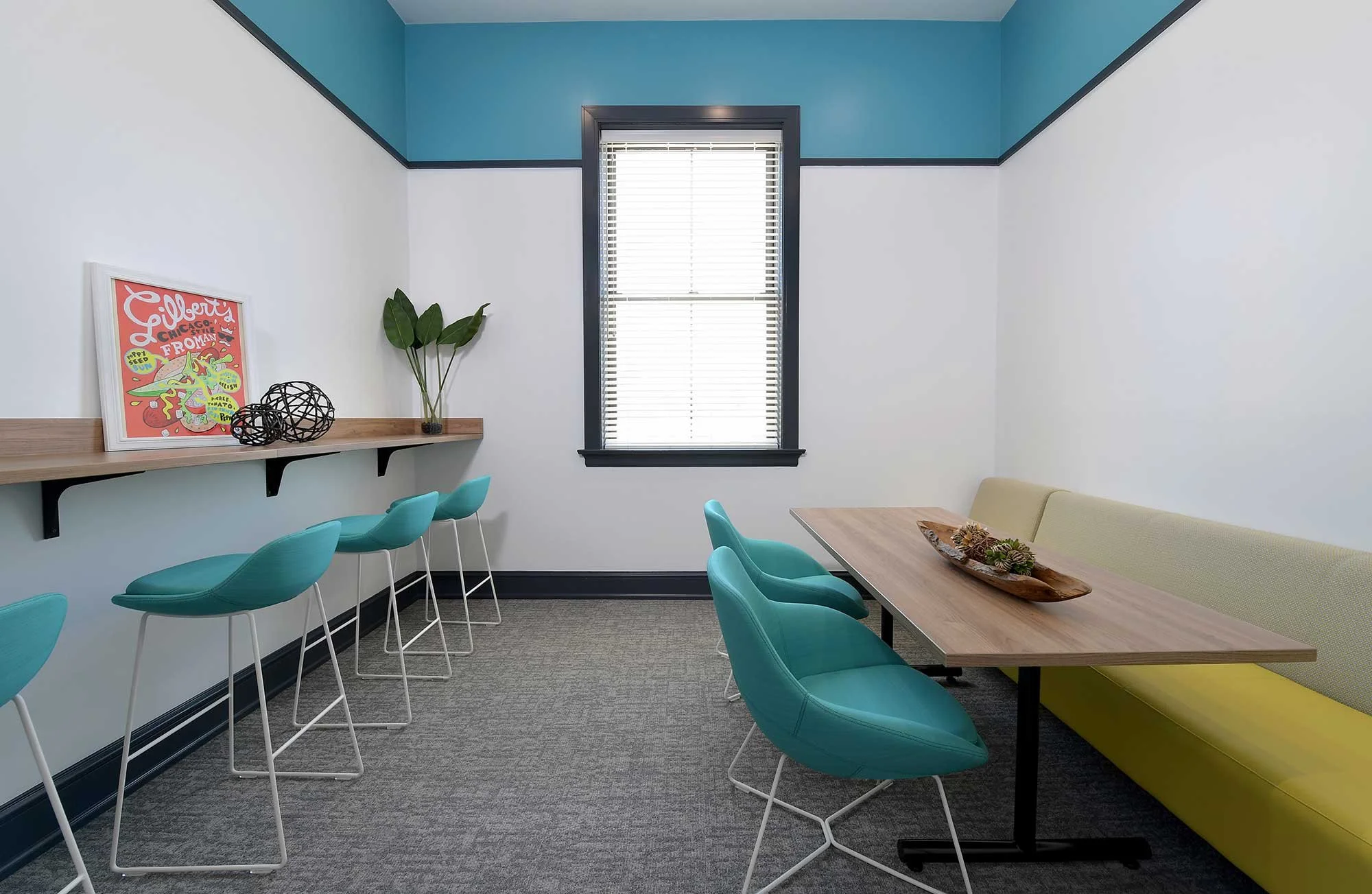
Bright-colored lounge and huddle area
It also makes it easier to design multi-functional environments. A single area can support meetings, team collaboration, or focused work depending on the need.
This kind of adaptability helps maintain momentum during periods of growth or change, rather than slowing things down.
A Smarter Investment During Renovation Planning
Renovating a workplace is a significant investment, which is why long-term value matters.
Modular furniture supports that investment by reducing the need for future replacements or redesigns. Instead of updating the workplace every time something changes, businesses can reconfigure existing elements to meet new demands.
It creates a more sustainable, cost-effective approach—one that continues to deliver value well beyond the initial renovation.
Supporting the Modern Employee Experience
Today’s workplace needs to support a variety of work styles.
Employees move between focused tasks, team collaboration, and hybrid schedules throughout the day. A modular environment makes it easier to create spaces that support each of these needs—without expanding the overall footprint.
The result is a workplace that feels more intentional, adaptable, and aligned with how teams actually work.
Planning a Workplace That Grows With You
A renovation is more than an upgrade—it’s an opportunity to rethink how your workplace supports your business.
Modular furniture offers a practical way to build flexibility into that plan from the start. Instead of designing for today alone, it creates a workplace that can evolve as your team grows and changes.
If you're in the early stages of planning a renovation or rethinking your current workplace, exploring the right furniture strategy is a strong place to begin. Check out Rieke’s Custom Furniture Page to see how custom modular solutions can support a more flexible, future-ready workplace—and start building a space that grows with your team.
