
The Hidden Impact of Workplace Design on Employee Performance
When organizations want to improve employee performance, the conversation usually goes to familiar places: stronger leadership, better processes, improved benefits, more training. Those all matter. But there's another factor shaping how employees work every single day that rarely makes the list: the workplace itself.
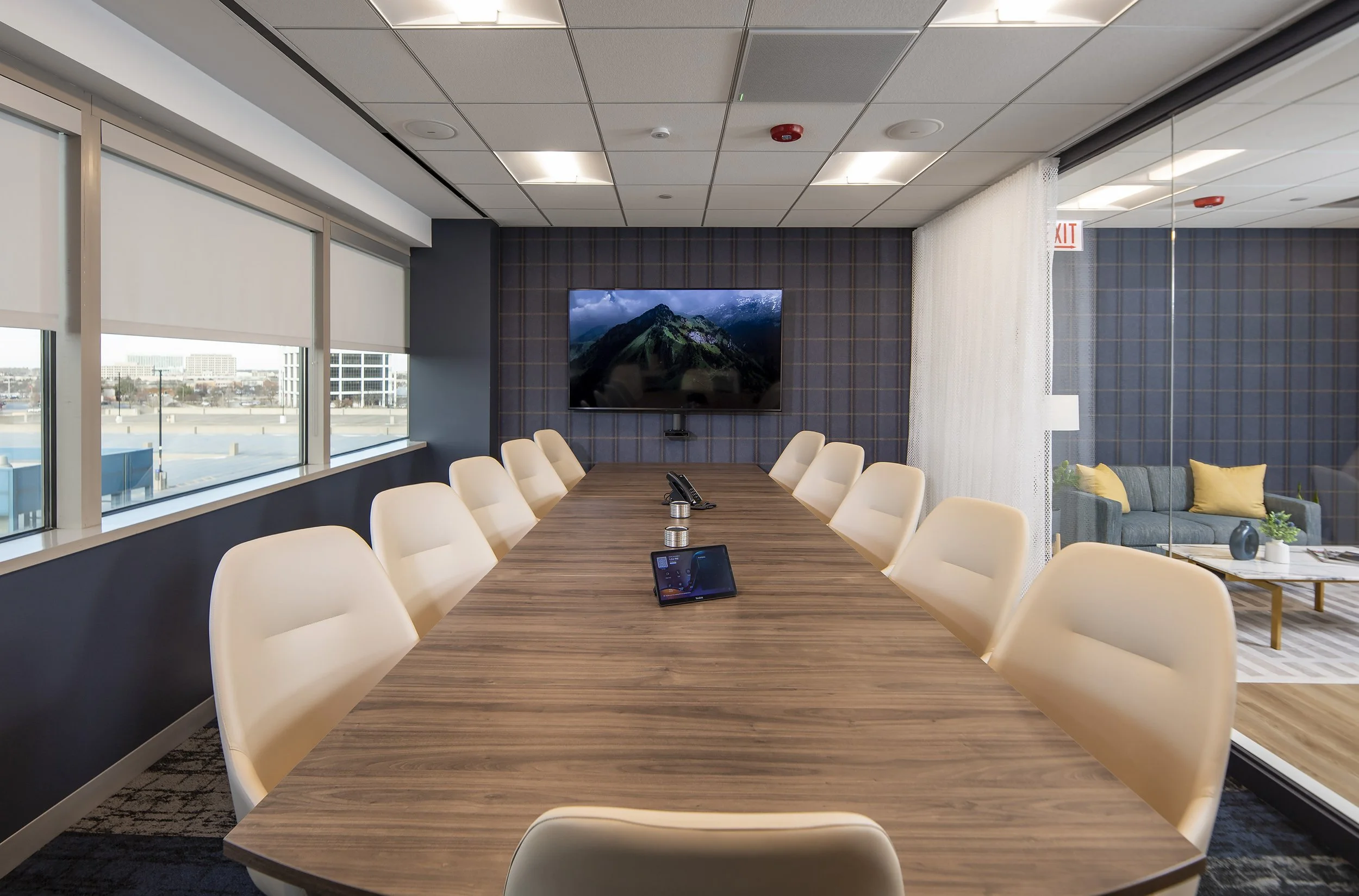
Conference room with a sliding curtain for privacy
The space employees work in does more than give them somewhere to sit. It shapes how easily teams collaborate, how well people can focus, and whether employees feel supported as they move through their day. When a workplace is working, most people won't even notice — the work just feels easier. Teams have the space they need. Collaboration happens without anyone forcing it. People can focus without constantly working around distractions. But when the workplace isn't supporting how people actually work, employees feel that too — even if leadership doesn't see it show up on a spreadsheet.
A conference room that makes collaboration harder instead of easier. A layout that creates constant, unnecessary interruptions. No real space for focused work. These read like small design quirks. Over time, they become performance problems.
That's the hidden part: the physical environment is quietly shaping how people experience work every day, whether or not anyone's tracking it.
The Workplace Talks Before Anyone Else Does
Every workplace communicates something, and it starts before a single conversation happens. Employees experience the physical space before they experience culture through meetings or leadership. Does it feel welcoming? Does it actually reflect how people work? Does it feel like it was built with them in mind?
Those first impressions matter — but the daily experience matters more. Employees move between focused work, collaboration, meetings, and quick conversations all day long. When the space supports that movement, people can just get on with their work. When it doesn't, they spend real time and energy adapting to the space instead of doing the job it's supposed to support.
Workplace design isn't the only thing driving employee success. But it's a big part of whether people have what they need to succeed in the first place.
Different Work Needs Different Space —Not a Generic One
Productivity problems aren't always an effort problem. Often, people are just working around a space that wasn't built for what they're actually trying to do. Focused work needs concentration and a bit of privacy. Collaboration needs room to actually exchange ideas out loud. Virtual meetings need a setup that supports being heard and seen clearly.
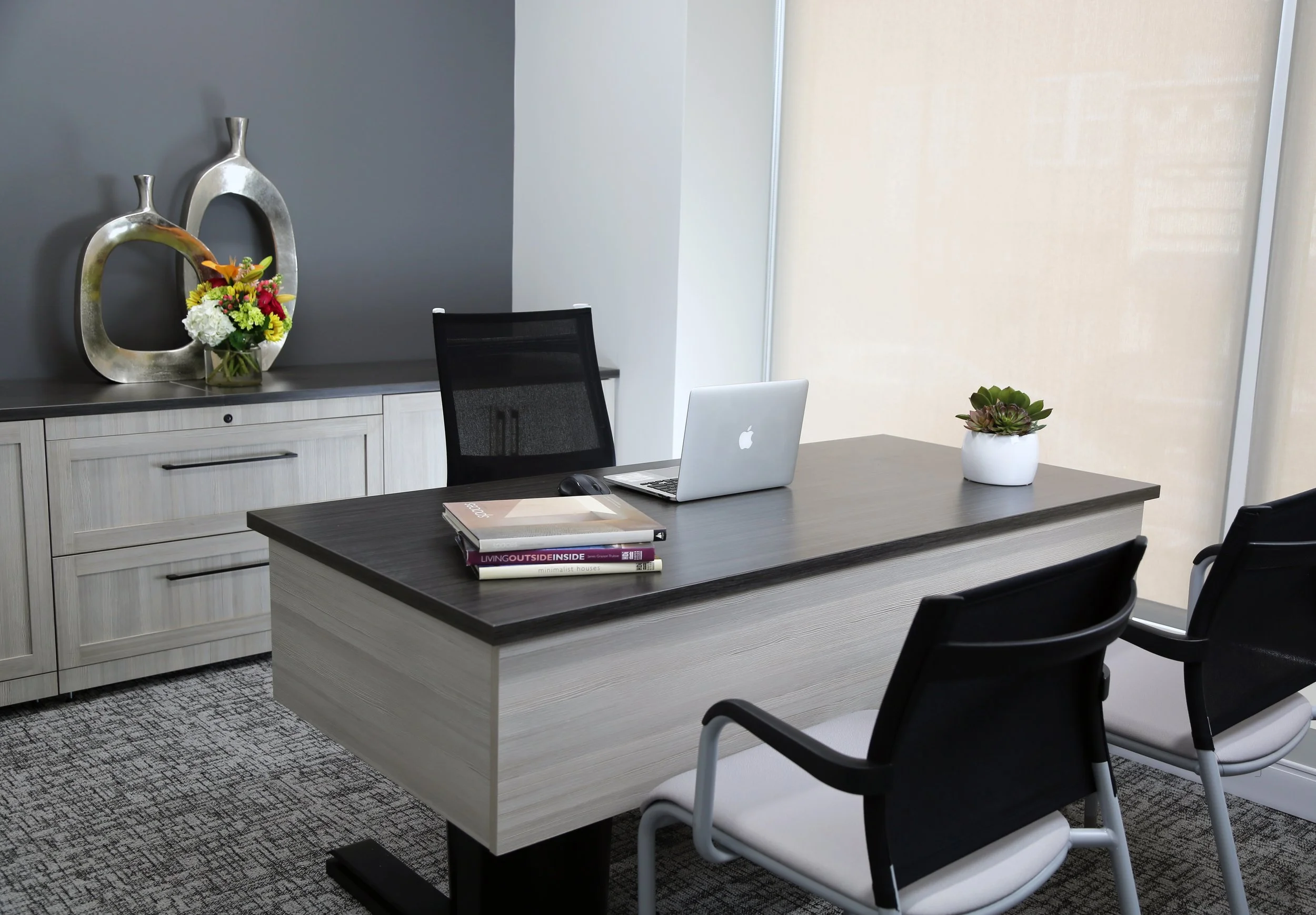
Private Office
A workplace designed with those different needs in mind removes friction before it starts. The goal isn't just giving people somewhere to work — it's giving them an environment that helps them work well.
Connection Doesn’t Happen on Its Own
Some of the most valuable moments at work happen outside of scheduled meetings — a quick hallway conversation, an informal debrief after a call, an idea that gets shared in passing. Those moments are harder to come by when the space doesn't leave any room for them.
Thoughtfully designed collaboration areas and flexible shared spaces give people the chance to actually connect — not just coexist. And that connection isn't just a nice-to-have: employees who feel connected to their team and organization tend to be more engaged and more invested in the work itself.
Built for How Work Keeps Changing
The way people work hasn't stopped evolving. Hybrid schedules, new technology, shifting employee expectations — all of it keeps changing what a workplace actually needs to support. Organizations need spaces that can flex with their teams instead of falling behind them.
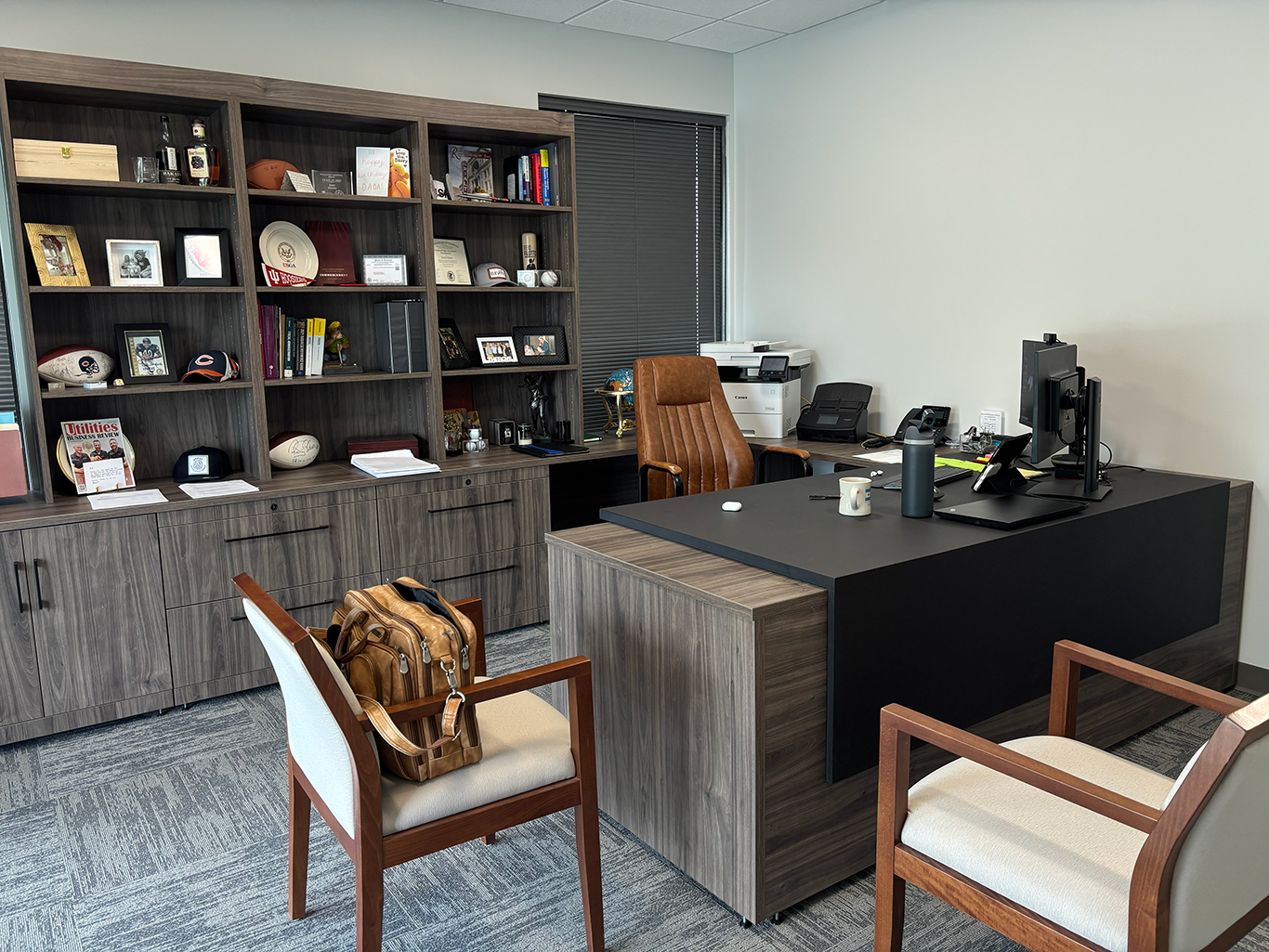
Private Office with Custom Storage
Flexible layouts, modular furniture, multi-purpose spaces, and custom solutions let a workplace support different working styles without a full renovation every time something shifts. When the space evolves alongside the people using it, employees get the flexibility and support they need to actually perform at their best.
Connection Doesn’t Happen on Its Own
Workplace design shapes far more than how a space looks. It shapes how employees focus, collaborate, connect, and experience the organization every day. It's not the only lever that drives performance or retention — but it creates the environment where all of that plays out.
The strongest workplaces start the same way: by understanding how people actually work, then making intentional decisions that align employees, business goals, and space.
Ready to See What Your Workplace Could Be Doing for Your People?
At Rieke, we believe thriving organizations start with thriving employees. Through Project Thrive, we help organizations evaluate how their workplace is currently supporting — or working against — employee wellbeing, engagement, and performance. By aligning workplace strategy, interior design, and custom furniture, organizations build environments where employees, and the business, can actually thrive.
