
The Workplace Has Changed. Has Your Furniture Kept Up?
Work doesn't look like it did a few years ago. Hybrid schedules are the norm, not the exception. Teams move between quiet, focused work to spontaneous, collaborative work in the same day. The rigid, everyone-at-a-desk-from-nine-to-five structure has loosened up — and it's not coming back the way it was.
Walking into a lot of offices, you will notice the furniture tells a different story. There are rows of identical desks and chairs are picked for a bulk order, not a body. Layouts are often designed for a workplace that doesn't really exist anymore.

Shared Workstations with matching Storage
For the people running those offices, that gap has real business consequences. When a space doesn't reflect how a team actually works today, employees feel it — even if they can't quite put their finger on why. It shows up as low-grade discomfort. A meeting that never quite clicks because the room wasn't built for that kind of conversation. A quiet sense that the office is something to get through, not a place that works for you. Over time, that friction shows up in the metrics leadership actually tracks: engagement, retention, and how much employees want to come back into the office at all.
This post breaks down why customizing furniture to fit your people and your environment is what actually delivers value today. Not because "custom" sounds premium — but because of what it gives your team: comfort, productivity, collaboration, and a real sense of security in their space.
The Workplace Has Quietly Shifted
Somewhere in the last few years, the way we work has changed. Flexibility became an expectation, not a perk. Collaboration became less about scheduled meetings and more about spontaneous huddles, quick check-ins, and work that flows between people instead of sitting in one person's inbox. Employees expect their workspace to support focus and connection — often within the same hour.
Generic, one-size-fits-all furniture wasn't built for any of that. It was built for a version of the workplace where everyone sat in the same spot, did the same kind of work, and needed the same things from their environment. That version of work is largely gone — but a lot of office furniture hasn't gotten the memo.
For a decision-maker, that's the core issue: the workplace has evolved, but the physical environment often hasn't kept pace with it. That mismatch is quiet, but it's not free.
Comfort Isn’t About Luxury. It’s About Feeling Right.
When people talk about comfort at work, it's easy to hear that as a soft, secondary concern — something nice to have if the budget allows. But comfort isn't indulgence. It's the difference between an employee who can settle in and actually do their work, and one who's quietly distracted by a chair that doesn't fit or a desk at the wrong height.
Comfort affects focus. It affects energy levels across the day. It affects whether someone feels like the office was designed with them in mind, or whether they're just making do.
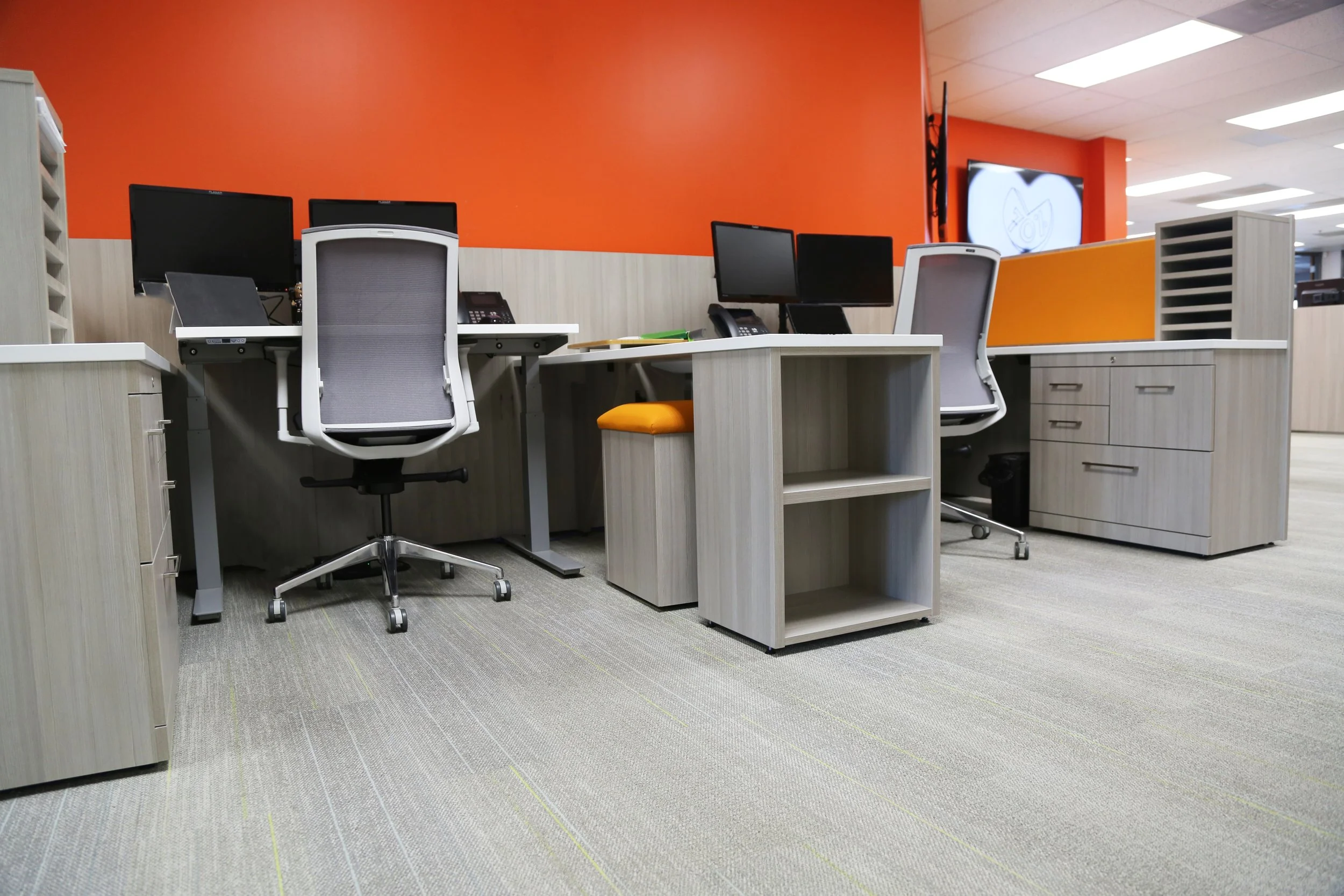
Sit-stand workstation with custom storage and ergonomic office chair
Custom furniture flips the usual equation. Instead of asking people to adapt to furniture that was never built with them in mind, it adapts to the real people and the real workdays already happening in your space. That's not a soft benefit — it's the difference between furniture that supports performance and furniture that quietly works against it.
Today’s Teams Collaborate Differently — Furniture Should Reflect That
No two days look the same for most teams anymore. Some days call for heads-down, uninterrupted focus. Others are entirely collaborative — a string of conversations, working sessions, and problem-solving that happens shoulder to shoulder. A workplace today needs to flex between both, sometimes within the same afternoon.
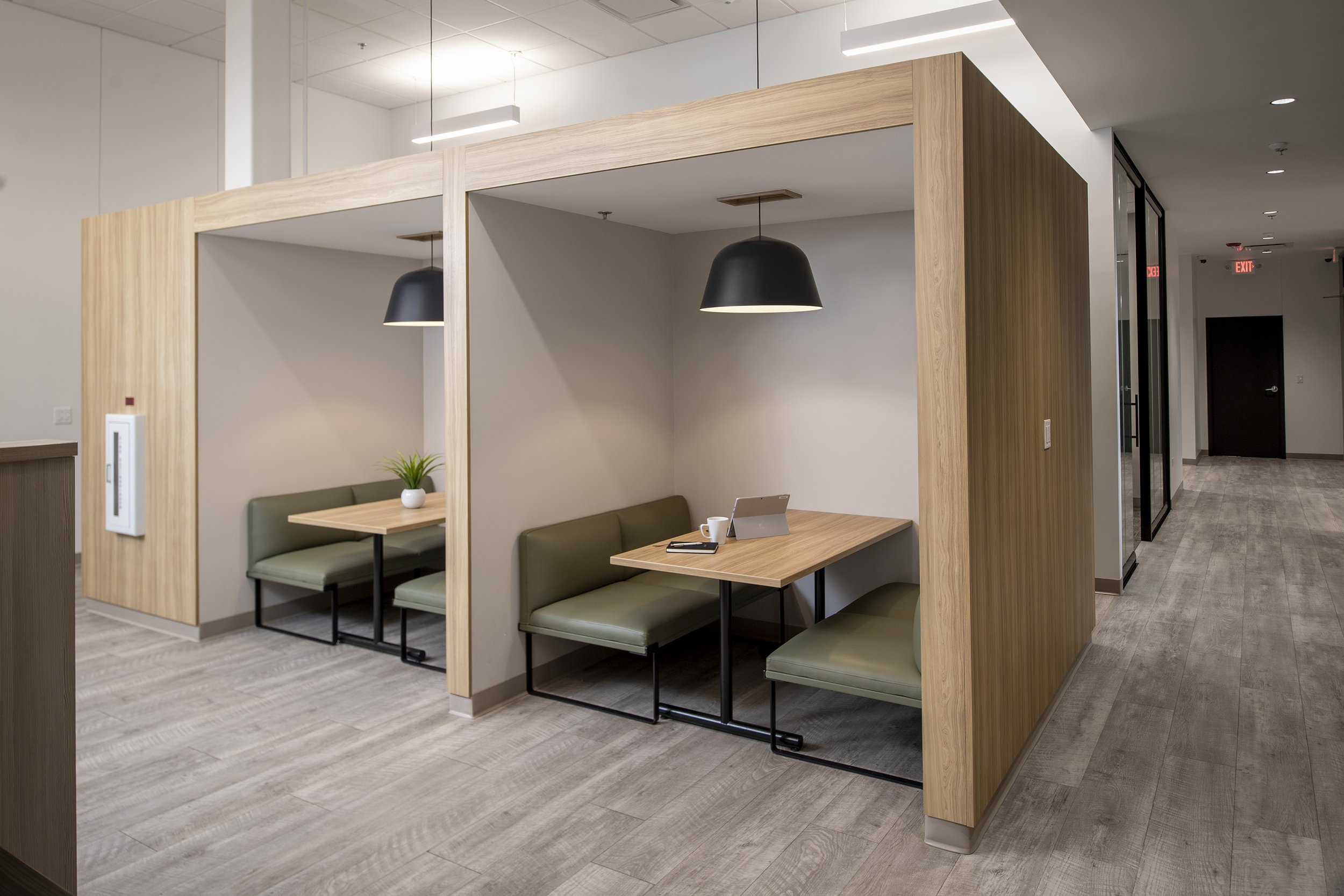
Multipurpose Booths with Lounge Seating
That kind of flexibility doesn't happen by accident, and it doesn't come from a generic layout dropped into any office regardless of who's using it. It comes from customization — furniture and space planning built around how your specific team actually moves, works, and collaborates.
Why “Custom” Isn’t About Premium — It's About Fit
It's worth saying directly: this isn't about spending more money for the sake of it, or upgrading to furniture that just looks nicer. It's about creating a workplace that gives employees comfort, security, and a sense of belonging — because the space was actually built around them, not assembled from a catalog.
And when a space fits its people, it shows. It shows up in morale. It shows up in how focused employees are able to stay. It shows up in how naturally people work together, instead of working around a space that doesn't serve them.
Is your space built around your team, or around whatever was easiest to order in bulk?
The workplace has changed —how employees work, collaborate, and expect to feel at work is genuinely different than it used to be. The furniture inside that workplace should change with it. Customizing your space isn't about luxury. It's about giving your team an environment that actually supports comfort, productivity, collaboration, and security, so they can do their best work — and giving your organization a space that reflects that investment back in engagement and performance.
Ready to see what a space built around your team could look like? Explore custom furniture options with Rieke.
