
Why Workplace Wellness Starts with Better Lighting
As the days get shorter, something predictable starts happening in offices everywhere. Staff energy levels dip earlier. Afternoon fatigue sets in before 3 p.m. People seem a little more sluggish and less focused. It's easy to chalk it up to “the season.”
But sometimes, the bigger culprit is something much closer to home: what's happening overhead.
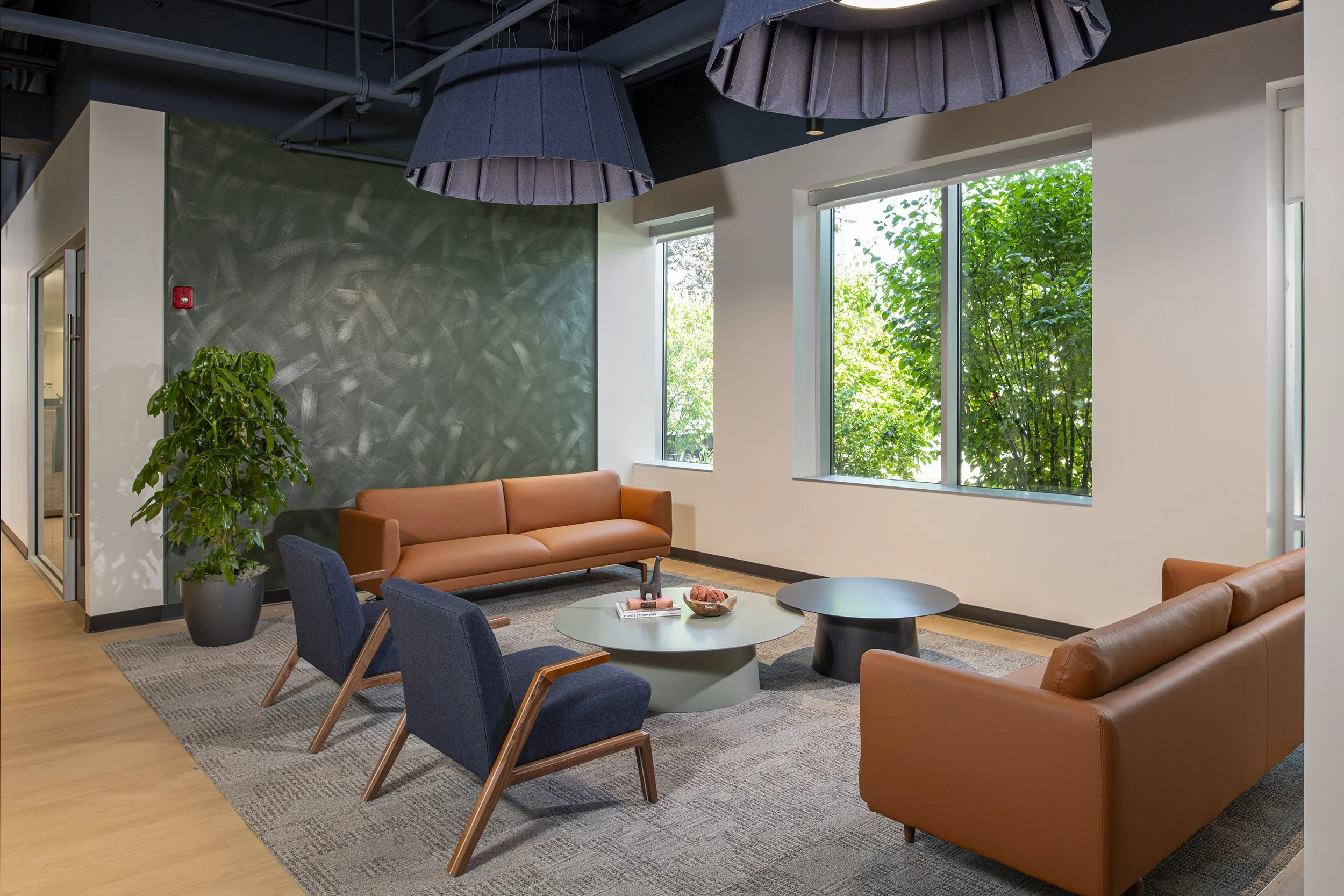
Lounge area with big windows and natural lighting
Lighting is one of the most overlooked elements of workplace design and one of the most powerful. It can influence how people feel, how well they concentrate, and how much energy they have throughout the workday. As natural daylight becomes harder to come by during the fall and winter months, the lighting choices inside your office start to matter even more.
The Real Impact of Poor Office Lighting
Most people don't think twice about office lighting unless it's visibly bad. For example, a flickering fixture, harsh glare on a computer screen, or a conference room that feels more like a cave.

But lighting doesn't have to be dramatically bad to affect employees. Even lighting that's too harsh, too dim, or poorly positioned can contribute to discomfort and fatigue over the course of a workday.
Poor workplace lighting has been associated with:
Eye strain and headaches
Afternoon fatigue and lower energy
Reduced focus and productivity
Lower mood
Discomfort caused by glare and harsh contrast
These effects may seem small individually, but they can add up. A workspace that leaves employees feeling drained by early afternoon isn't doing much to support their best work.
Why Lighting Matters More in Fall and Winter
As daylight hours shrink, offices lose one of their best sources of natural light: the sun.
Natural light can support alertness, mood, and the body's natural sleep-wake cycle. When daylight is limited, the workplace becomes an even more important part of the environment employees experience throughout the day.
That doesn't mean simply turning up the brightness.
Good workplace lighting is about using the right type of light in the right place.
What Thoughtful Lighting Design Looks Like
Creating a better-lit workplace doesn't necessarily require a complete renovation. Often, it starts with looking at how lighting interacts with the way people actually use the space.
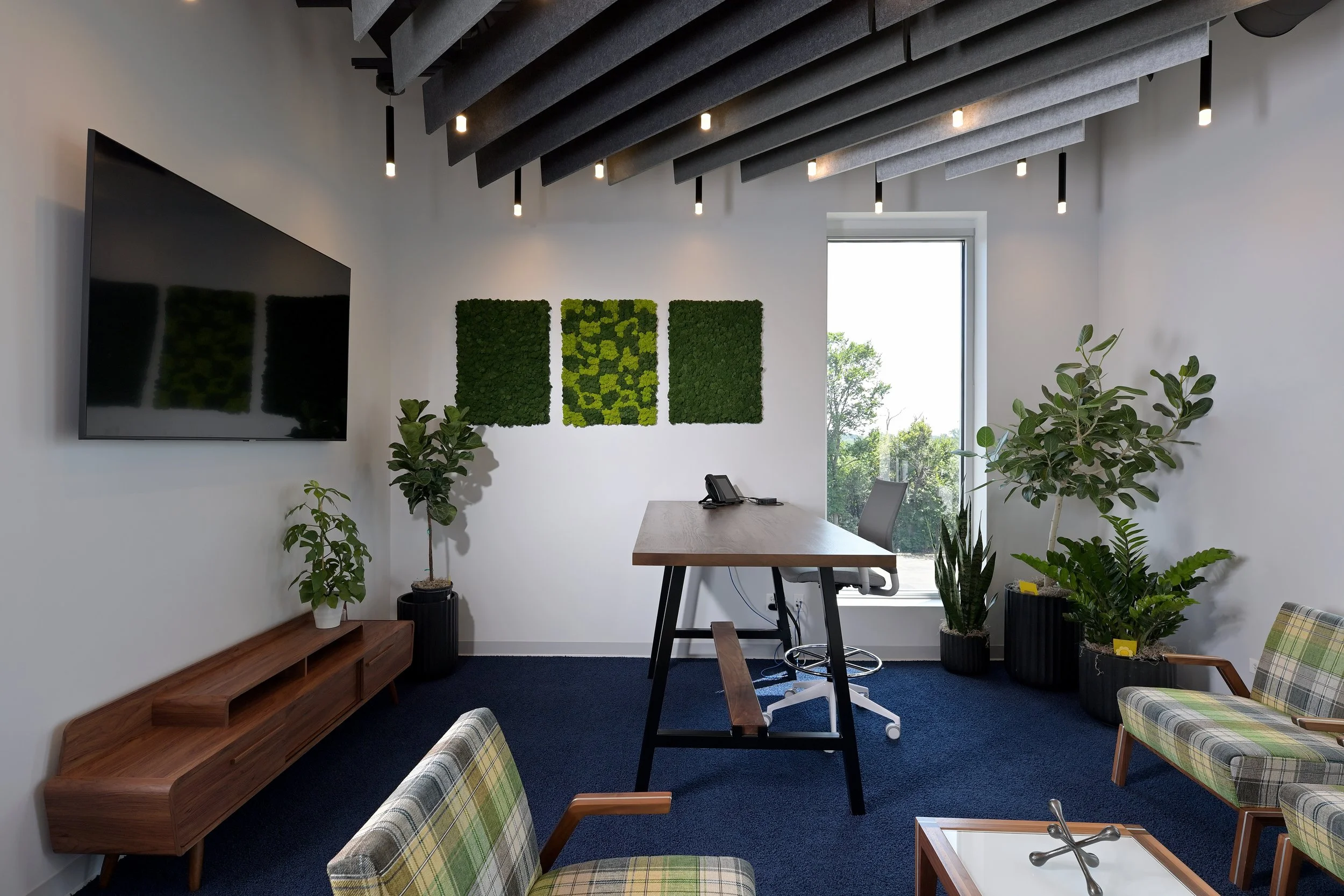
Private office with natural lighting and plants
Use layers of light. Relying entirely on overhead fixtures can create a flat or overly harsh environment. Combining ambient, task, and accent lighting can create a more balanced space.
Make the most of natural light. Workstation placement, partitions, and furniture can all affect how much daylight reaches employees. Thoughtful space planning can help maximize access to windows rather than unintentionally blocking them.
Match lighting to the task. Individual workstations, conference rooms, reception areas, and lounges don't necessarily need the same lighting. Designing lighting around the activity helps each space feel more intentional.
Reduce glare. Glare from fixtures or windows can make screens difficult to see and contribute to eye strain. Furniture orientation, fixture placement, and diffused light can all help.
Lighting Is One Part of Workplace Wellness
One of the unique things about our work is that we have a deep understanding of how to create a workplace where people thrive at work. Lighting is an important piece. But so is having a comfortable desk, eliminating distractions from noise, and designing your conference rooms, breakrooms, and collaboration areas to be functional, inviting, and enjoyable to use.

When your lighting, furniture, and space planning all work together, your people will thrive and their productivity will improve.
Small Changes Can Make a Big Difference
Workplace improvements can start small with the fundamentals like better lighting, more thoughtful furniture placement, and addressing things that distract or frustrate employees.

As fall and winter approach, it's worth taking a closer look at your workplace and asking: Is your office helping your team feel comfortable, energized, and ready to do their best work? If you’d like some fresh ideas and advice to refresh and renovate your office, we can help.
Explore the Project Thrive Program and contact us for a free consultation that will help you see how to transform your workspace into one where your team thrives.
